How Do I…?
The practical questions, answered step by step — calculating cost per mg, reconstituting, storing, and figuring out which vendors deserve your attention.

Adding Cagrilintide to Semaglutide: What CagriSema's Trial Data Shows
Cagrilintide isn't a second GLP-1. It works on a different appetite pathway, which is why pairing it with semaglutide (studied together as CagriSema) outperformed semaglutide alone in trials, not just added more of the same thing.
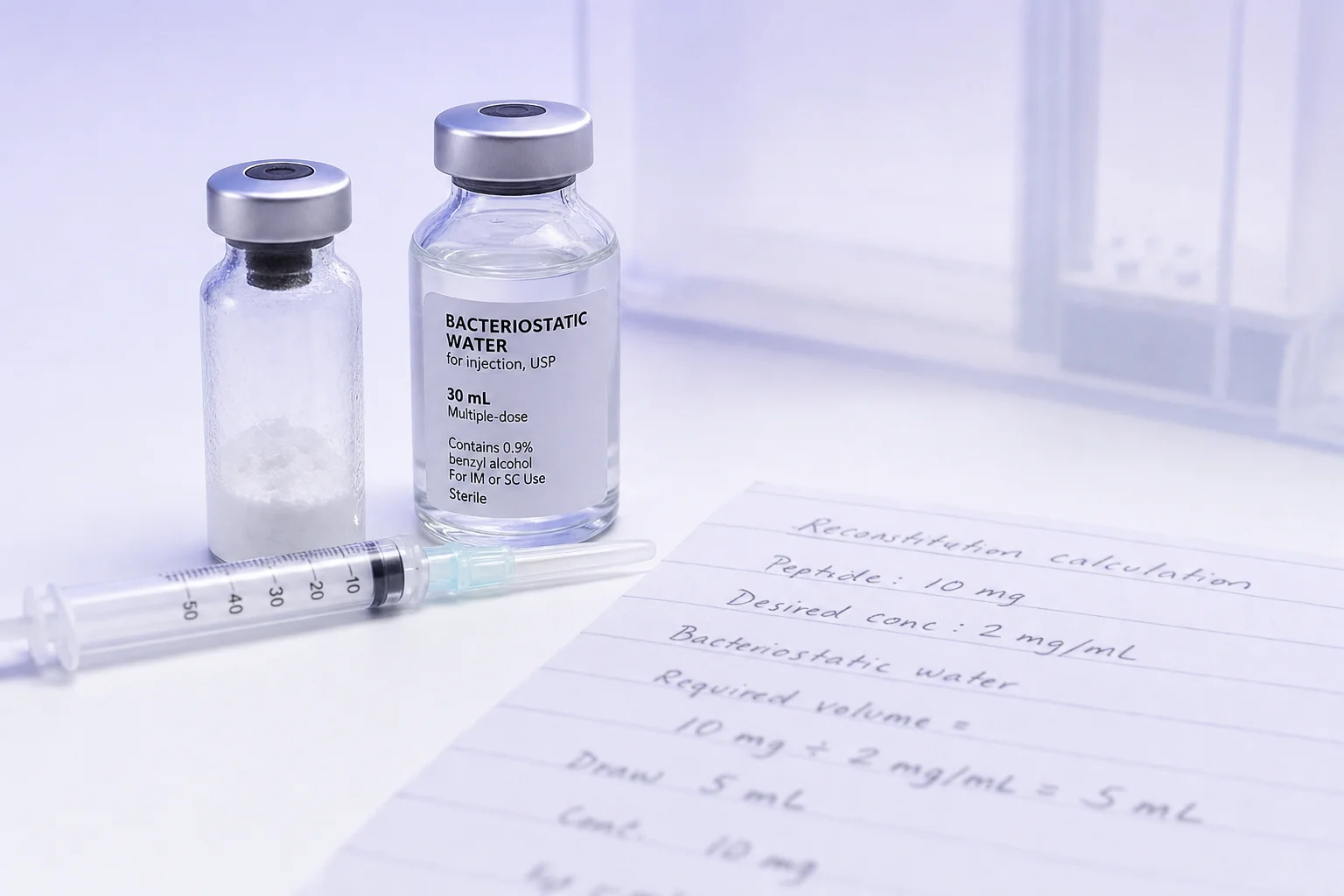
Bac Water and Syringe Math: How to Calculate Your Draw
Once you know a dose, you still have to figure out how much to pull into a syringe. Here's the math, step by step, with real examples.

Before You Buy Your First Peptide: What to Actually Check
Not a shopping list. A short set of questions worth answering before your money leaves your account, so the decision is yours and it's an informed one.

Cagrilintide Plus Retatrutide: The Research Gap, Explained
Retatrutide already works on three receptor pathways. Cagrilintide would add a fourth. No one has published a trial on the combination, so here's what the individual data and the mechanisms actually support, and what's still just a question.
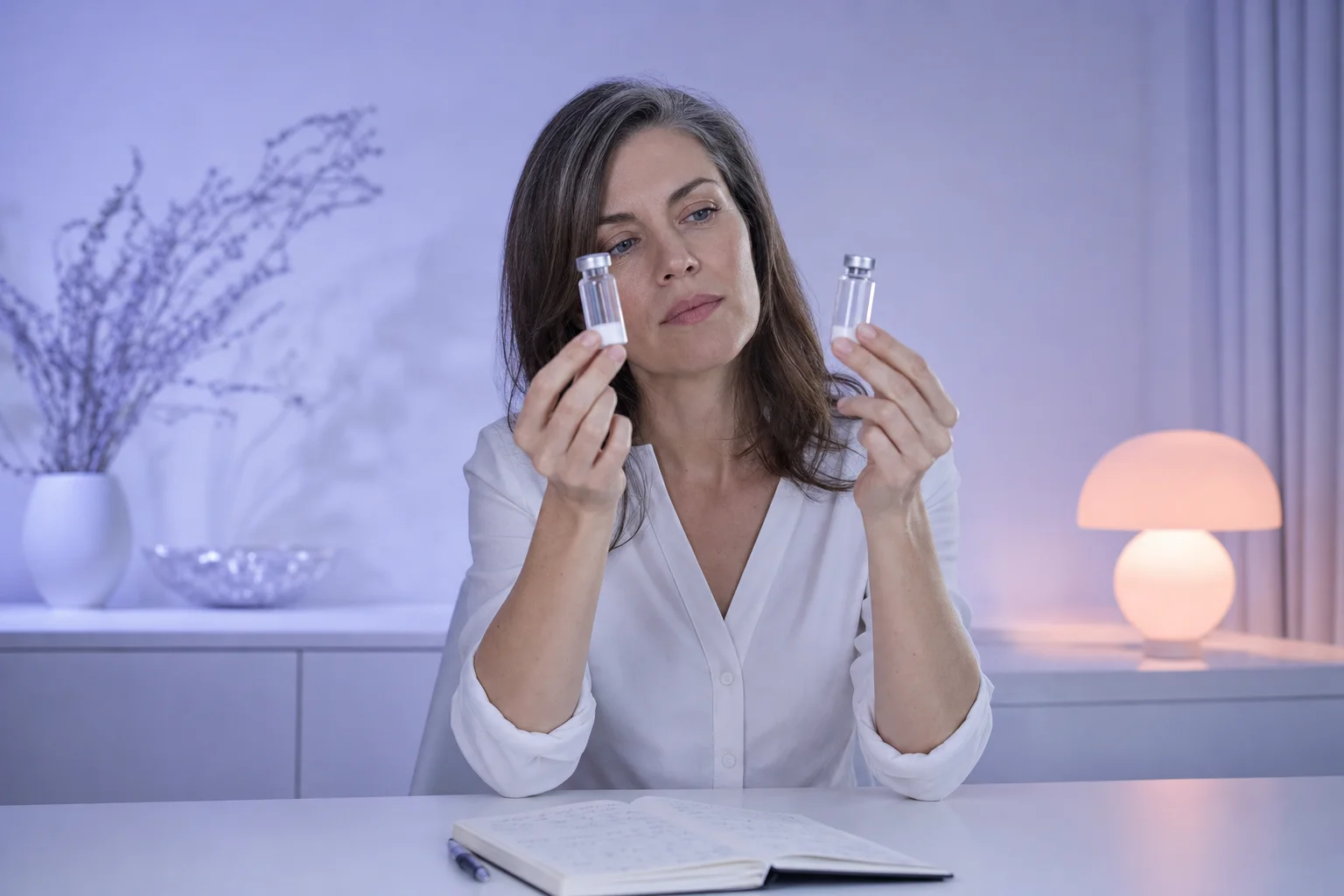
Cagrilintide Plus Tirzepatide: What We Actually Know So Far
There's no published trial on this specific pairing yet. Here's what the individual compound data and the CagriSema precedent can actually tell you, and where the real gap in the research sits.
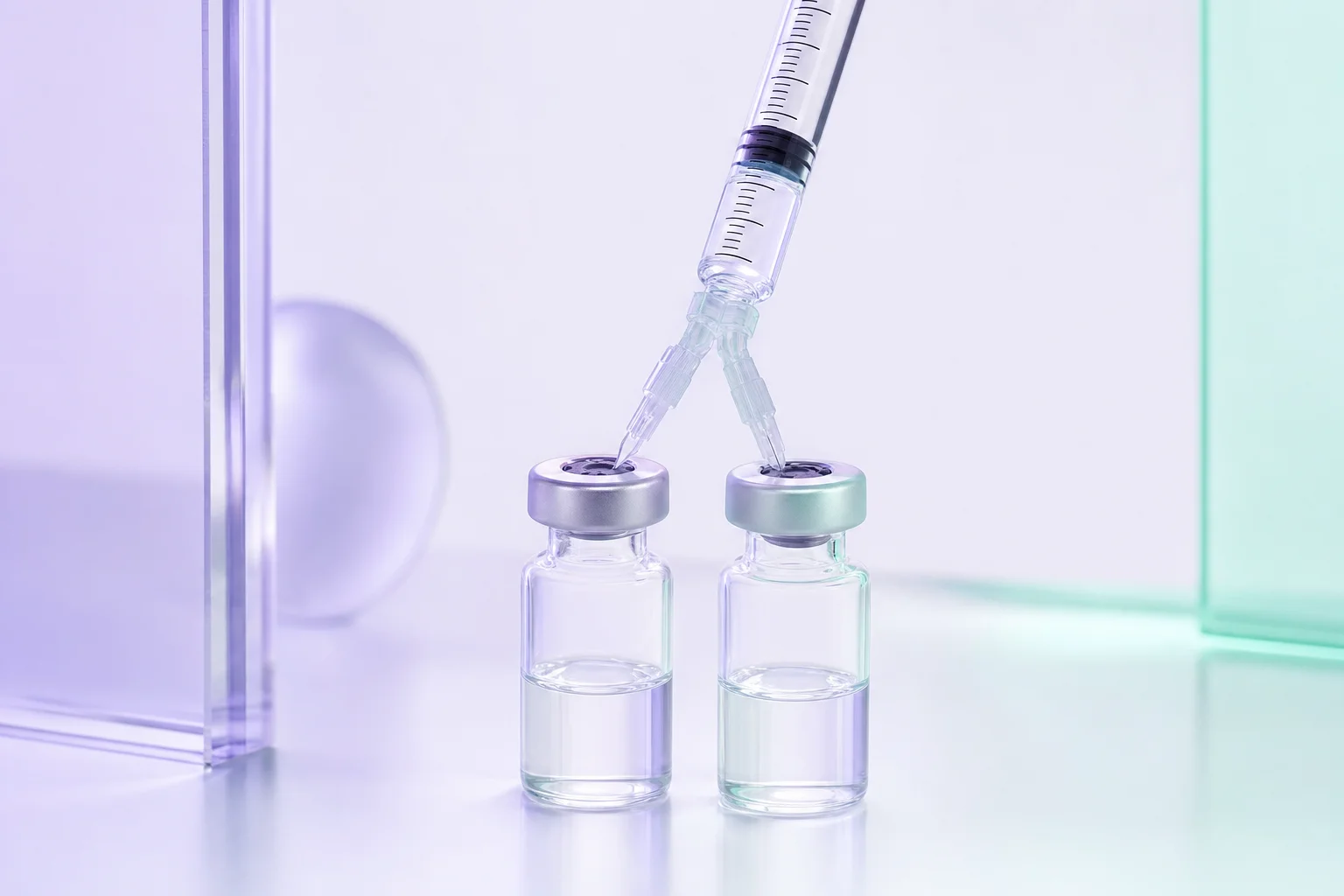
Can You Draw Two Peptides Into the Same Syringe?
If your protocol calls for two peptides at the same time, you can usually combine them in one syringe and inject once. Here is how to know when it is safe and how to do it correctly.

How much retatrutide should I take per week
The answer is less about the number than about how often it changes. The pattern retatrutide is actually escalated on steps up roughly every four weeks, and feeling nothing at week two is what week two is supposed to feel like.
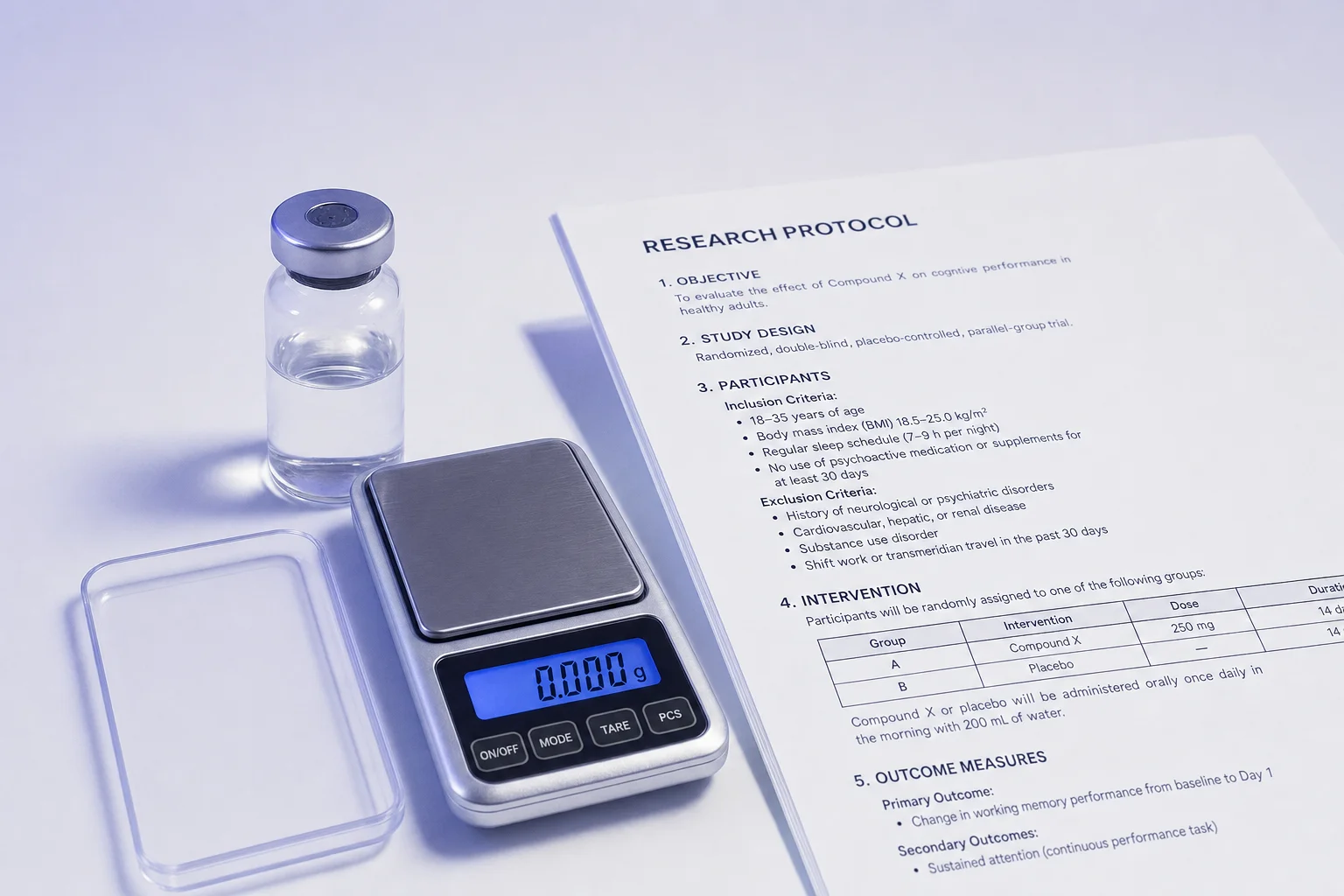
How Peptide Dosing Is Communicated in Research
Research papers don't say 'take this much.' They report what subjects received in studies. Here's how to read that language so you know what you're looking at.
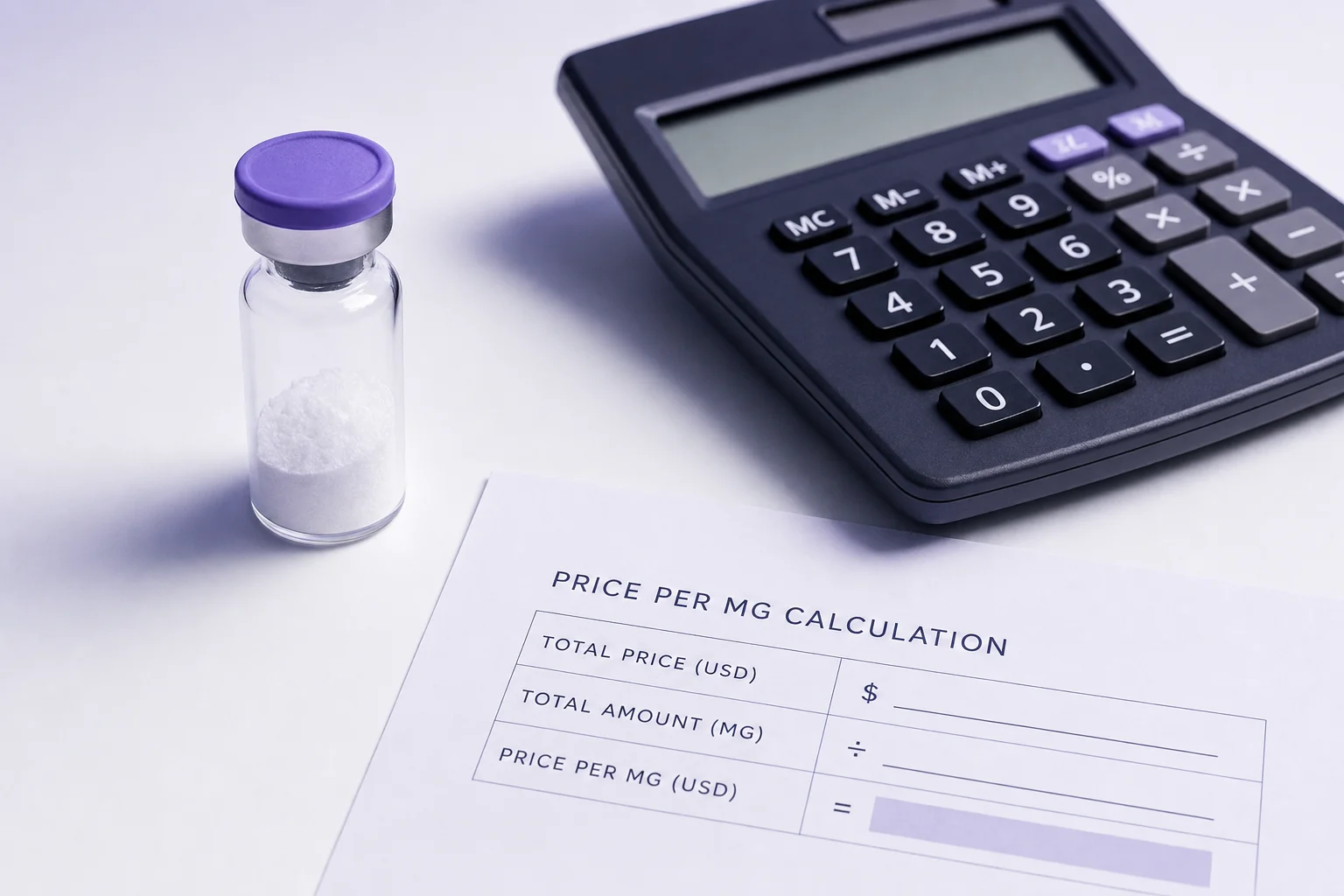
How to Calculate Peptide Price Per Mg (And Why Vial Price Misleads)
Two vendors. Two prices. Same peptide. Without knowing what you're paying per milligram, there's no way to know which is actually cheaper. Here's the formula, and where the comparison gets more complicated.
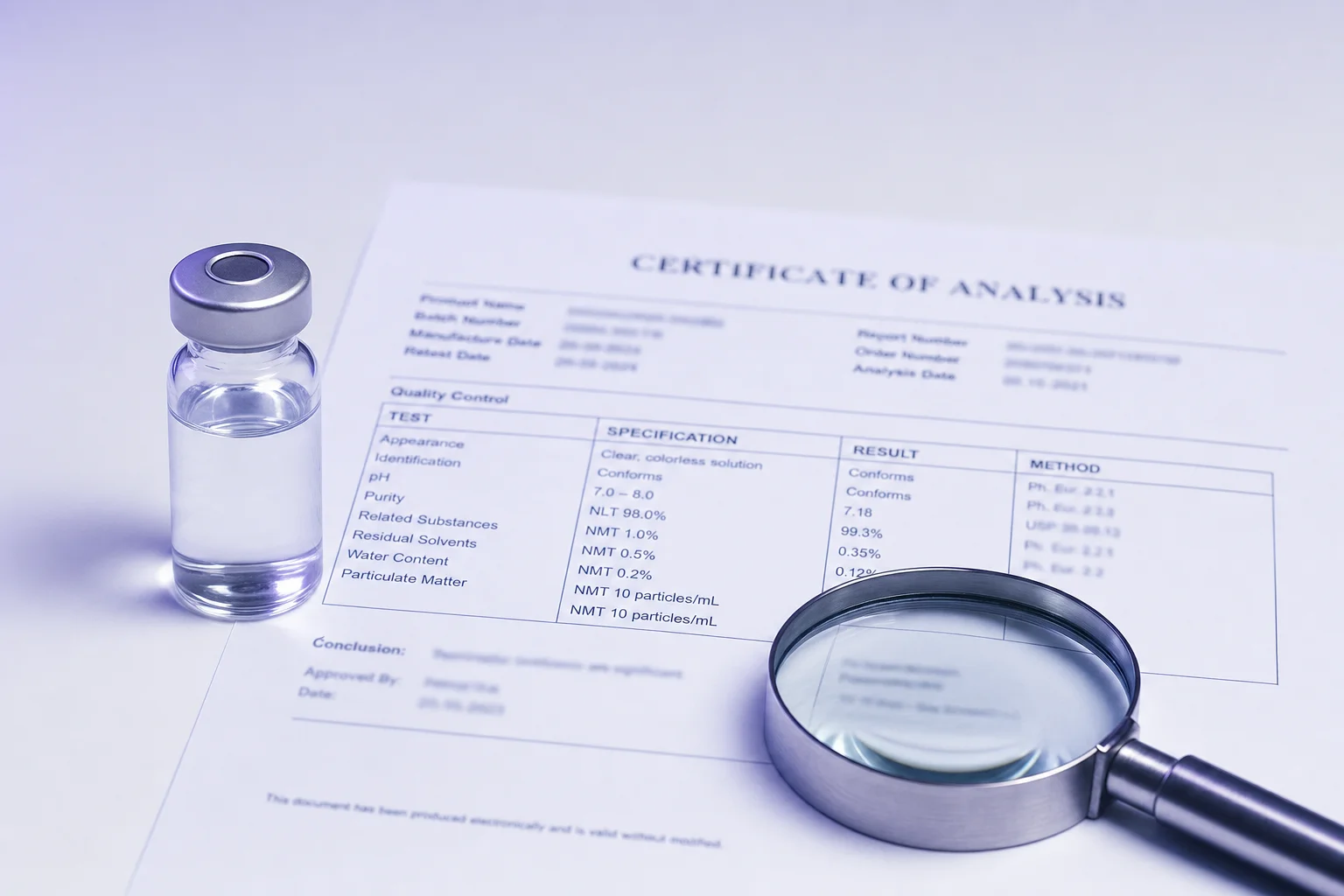
How to Evaluate a Research Peptide Vendor
The research peptide market is unregulated, which means quality varies enormously. Here is what to look for, what to avoid, and how to read the documents that actually tell you what is in the vial.
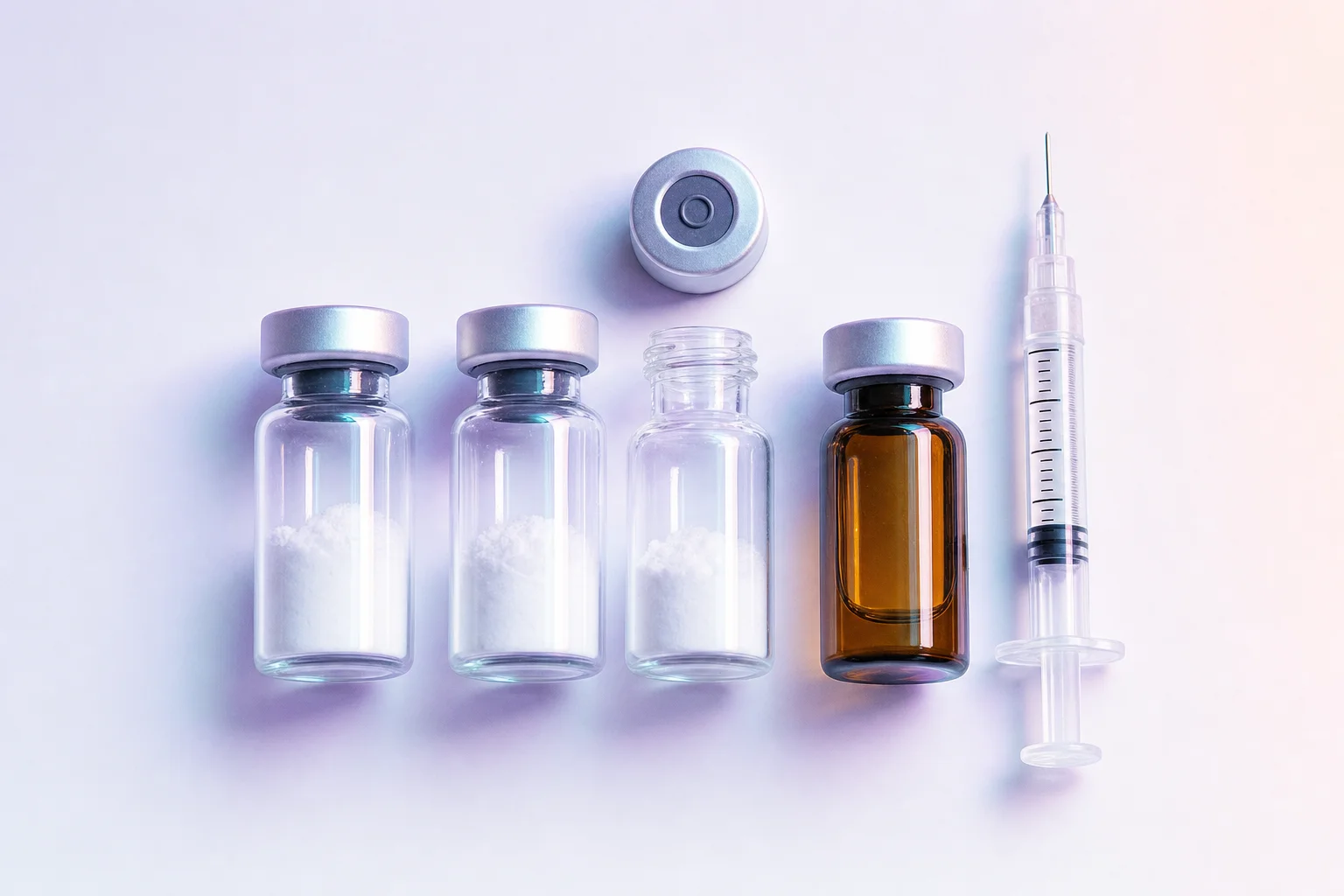
How to store peptides, powder and mixed
Powder is forgiving and a mixed vial isn't, so keep the powder cold, keep the mixed vial in the fridge, and write the date on it.

How to tell whether a certificate of analysis is real
Three checks, about thirty seconds, before you order. Start with the one that catches the problem you're most likely to meet.

Is It Legal? What the PCAC/FDA Peptide Rulings Actually Mean Right Now
An FDA advisory committee just recommended six of seven peptides for legal compounding. Here's what that vote actually changes today, and what it doesn't.

Is There a Peptide That Builds Muscle After 40?
The ones sold for muscle don't do what the label suggests, and there's one situation where a peptide genuinely helps. Which is which depends on what you're actually trying to fix.

Peptide Injection Supplies and What They Cost
The four things researchers keep on hand, what each one costs right now, and a plain explanation of syringe sizes, needle gauge, and needle length so you can figure out what to actually buy.

The Fat Loss and Body Composition Stacks Women Ask About Most
A few combinations dominate every fat loss conversation. Here is what each one is, why the research community discusses pairing them, and what the components actually cost per milligram.

The Longevity and Anti-Aging Stacks Women Ask About Most
The anti-aging category has more combinations in circulation than any other, and the thinnest evidence behind most of them. Here is what each pairing is, why the research community discusses it, and what the components cost per milligram.

The Recovery and Injury Stacks Women Ask About Most
Certain combinations come up again and again in recovery conversations. Here is what each one is, why the research community discusses pairing them, and what the components actually cost per milligram.

The Skin and Hair Stacks Women Ask About Most
Skin is the one category where a peptide might also be sitting in a jar on your bathroom shelf, which makes the pricing question stranger here than anywhere else on this site. Here is what each combination is, why the research community discusses it, and what the components cost per milligram.

The Sleep and Stress Stacks Women Ask About Most
Sleep is the category where the thing you are trying to fix is most often a symptom of something else, which makes it the easiest one to spend money on without getting anywhere. Here is what each combination is, why the research community discusses it, and what the components cost per milligram.

Peptides for Menopause and Perimenopause: What the Research Covers
Peptides aren't hormone therapy and don't treat menopause directly. Here's what researchers are actually looking at, the adjacent concerns like sleep, joints, metabolism, and skin that show up during this transition, and what a peptide protocol for perimenopause symptoms actually can and can't address.

Peptides for Sleep: What Researchers Are Studying
Growth hormone drops with age and perimenopause, and those drops are closely connected to the sleep disruption many women experience. Here's what researchers are studying about it.

Urolithin A, SS-31, and MOTS-C: What Order Actually Makes Sense?
These three research compounds all touch mitochondrial health, but running them together makes it nearly impossible to tell what's actually doing anything. Here's how to think about sequencing instead.

What a Real Surgery Recovery Peptide Stack Looks Like
One woman's account of using BPC-157, TB-500, KPV, and GHK-Cu after surgery lines up with what a lot of readers ask us: which peptides, and does any of it matter if you skip the basics.

What Are Nootropics?
Nootropics are compounds studied or used for cognitive benefits. The word shows up often in peptide research because several peptides target the same brain pathways researchers in both fields care about.

What to Expect: Your First Few Days on Epithalon
The first few days on a new peptide are usually the ones with the most questions. Here's what people commonly notice when they start epithalon, why it happens, and what settles on its own.

What to Take With NAD+, and What to Take First
Every thread about NAD+ ends with someone telling you to pair it with something. Here's which pairings have a reason behind them, which are just enthusiasm, and why the order matters more than the combination.

When retatrutide side effects mean the dose is too high
The question isn't really what the side effects are, it's whether what you're feeling is normal or a sign the last step was too big. Here's how people sort those apart, and what they do about it.
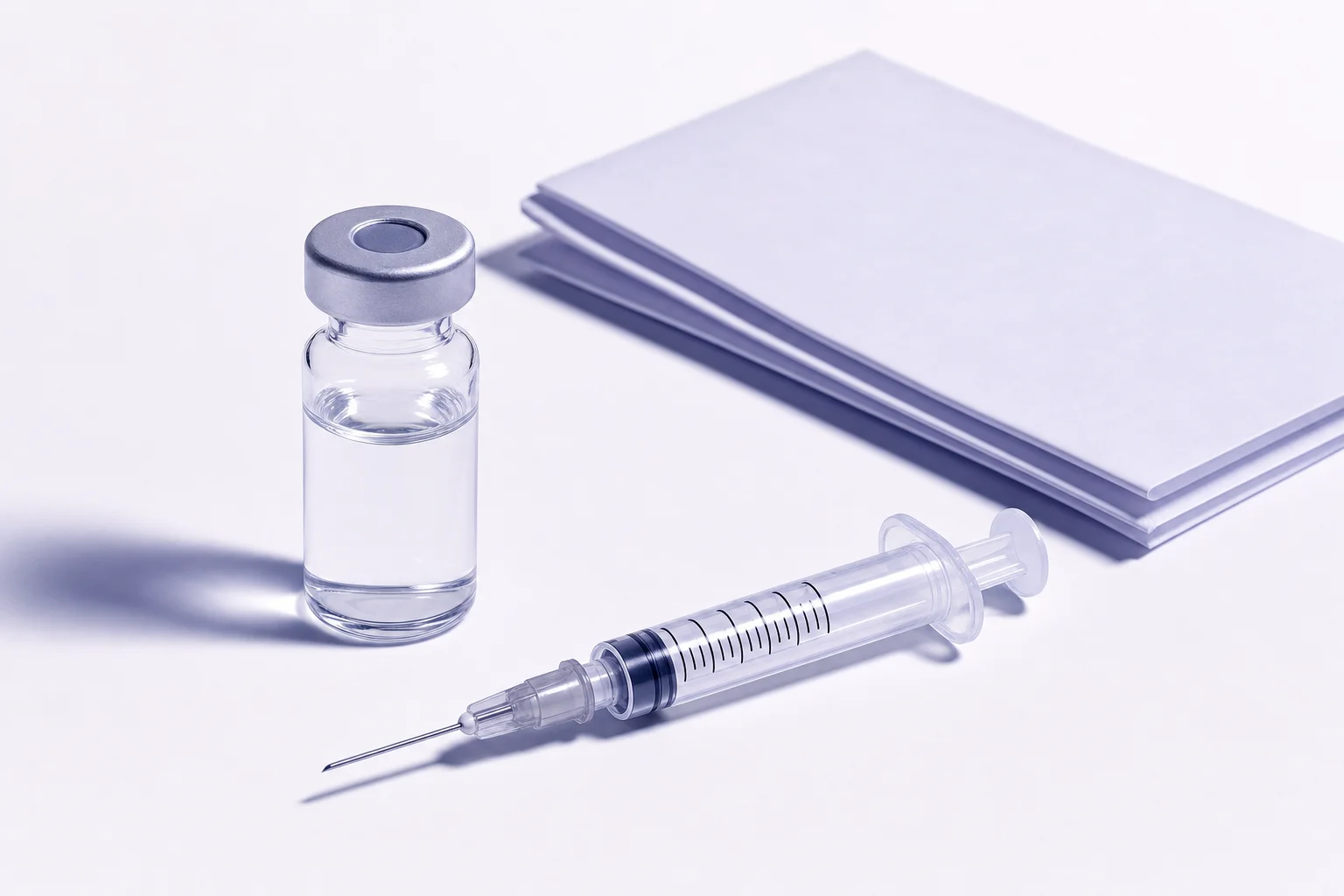
Where to buy bacteriostatic water
Amazon stopped selling bacteriostatic water in 2026, but peptide vendors and supply specialists still carry it.

Where to Buy Research Peptides Safely
Not a sales pitch: what actually separates a safe vendor from a risky one, how to tell if a certificate of analysis is real, and where our own comparison tool fits into the decision.

Which Peptide to Try First When You're Tired All the Time
Four compounds come up constantly when women talk about peptides for energy. They're not interchangeable, and the one worth trying first depends on what your tiredness actually feels like.

You Got Your GLP-1 From an Online Pharmacy and You're Also Looking at Research-Grade
Plenty of people are on both sides of this at once, a telehealth prescription in one hand and a research-grade vial in the other. Here's what actually differs between them, and what's worth checking before you treat them as interchangeable.