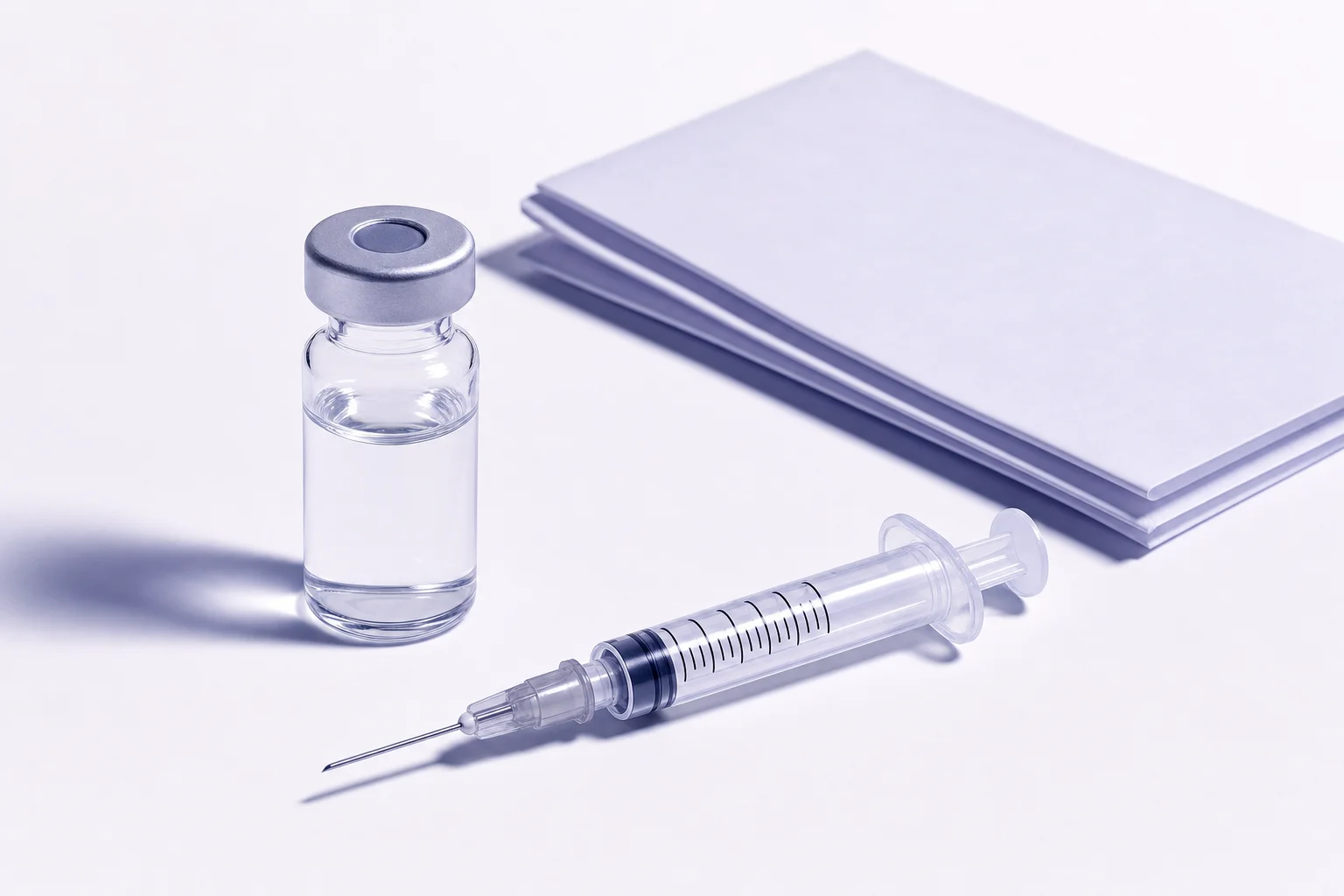
Bacteriostatic water disappeared from Amazon in early 2026 after third-party testing found 9 of 11 Amazon products failed basic USP quality standards. If you want the full story on why Amazon pulled it, we covered that here. This guide is the practical part: what BAC water actually is, what quality to demand from any source, and where to get it now.
What bacteriostatic water is and why it's not optional
Bacteriostatic water is sterile water containing 0.9% benzyl alcohol. The benzyl alcohol is the key ingredient. It doesn't kill bacteria, but it prevents bacterial growth, which is what makes BAC water suitable for multi-use vials. Plain sterile water has no preservative. Once opened, it needs to be used immediately. BAC water, stored properly in the refrigerator, stays protected against contamination for up to 28 days after first use.
For anyone managing multiple peptide vials over weeks, that's not a convenience feature. It's a functional requirement. Using plain sterile water (or worse, tap water) for peptide reconstitution introduces contamination risk in a solution going directly under the skin.
A note for women using peptides
A significant portion of the women navigating perimenopause and post-menopause who use research peptides are doing so because conventional medicine hasn't offered them many good options for fatigue, body composition changes, recovery, and cognitive shifts. If that's you, BAC water quality matters in a specific way: high-pH or under-preserved reconstitution fluid degrades peptides before they're ever used, and introduces contamination risk in solutions going directly under skin. Sourcing from a verified vendor isn't a technicality. It's part of doing this carefully.
What to look for in a source
The Peptide Crafters testing that preceded Amazon's removal revealed two specific failure modes: pH out of range and insufficient benzyl alcohol. These are the two parameters to verify for any BAC water you buy.
pH: 4.0–7.0. This is the USP acceptable range. Most peptides are stable in a mildly acidic environment. When pH climbs above 7.0 into alkaline territory, it accelerates hydrolysis and can cause aggregation (the cloudiness that sometimes appears after reconstitution). Seven of the nine failing Amazon products came in above pH 7.5. Two were above 8.6. That's not close to spec.
Benzyl alcohol: 0.72%–1.08%. The USP floor is 0.72%. Below that, the bacteriostatic effect weakens and microbial growth in a multi-use vial becomes a real risk. Two Amazon products failed on this parameter.
Beyond those two numbers, the minimum to expect from any vendor: USP-grade designation, clear specification of 0.9% benzyl alcohol concentration, domestic US manufacturing or equivalent pharmaceutical-grade oversight, and a certificate of analysis (COA) available on request. If a vendor can't confirm pH range and BA concentration, keep looking.
Where researchers are sourcing it now
Peptide-dedicated vendors are a natural first choice. Their incentive structure aligns with quality: a vendor who sells bad BAC water is degrading the peptides they sell alongside it. Nationwide Peptides offers USP-grade bacteriostatic water with third-party verification. Ion Peptide and Heritage Labs USA carry it as well, both specifying USP-grade with 0.9% benzyl alcohol and domestic manufacturing.
Specialty reconstitution suppliers have also filled the gap left by Amazon. Bacteriostaticwater.com and Bacteriostaticwaters.com are dedicated suppliers. This is their core product, not a category add-on. That focus tends to translate into tighter quality controls.
Pharmaceutical-grade is the gold standard if you want the most verified option. Pfizer's Hospira bacteriostatic water for injection, USP, is manufactured under pharmaceutical quality assurance standards and is the benchmark most experienced researchers default to. PeptideTest.com carries it in 30 mL vials.
On pricing
Checked August 2026, a 30 mL bottle runs $16.50 to $19.99 from a reputable source. PeptideTest lists Pfizer Hospira from $16.50, Bacteriostaticwater.com is $19.90, and OROS Research is $19.99. Amazon was listing BAC water in the $8–$12 range, and the testing data explains where that difference was coming from.
The size you buy matters more than the vendor. Smaller vials cost roughly twice as much per mL: Apex Peptides sells 3 mL for $4.00, which is $1.33 per mL, against $0.55 per mL for the 30 mL Hospira. If you're reconstituting regularly, the large bottle is both the better product and the better price, which is not how this usually works.
What the Amazon removal actually changes
The Amazon removal is inconvenient but not a real supply problem. Multiple reliable sources exist, prices are reasonable, and what's now off the table was (by objective testing) largely not worth buying anyway. The friction of sourcing from a specialist vendor is a reasonable trade for actually knowing what you're reconstituting with.