This vs. That
Some peptides get talked about as if they're interchangeable versions of the same thing. They're usually not. These guides put two (or three) side by side — what they target, what the research shows, and what actually matters when you're deciding between them.

Adamax vs. Semax
Adamax is sold as an upgraded Semax that lasts longer and reaches the brain more easily. It might be. But the suppliers selling it don't agree on what molecule it is, and one of them lists a formula with no adamantane in it at all.

AOD-9604 vs. Semaglutide
Both get mentioned for fat loss, but they aim at completely different targets and sit at opposite ends of the evidence spectrum. One acts on appetite with strong trial support; the other targets fat metabolism with much thinner human data.

BPC-157 vs. TB-500
Both are studied for healing and recovery, and they're often discussed as a pair. But they repair tissue through different mechanisms, and one acts locally while the other acts body-wide.

CJC-1295 + Ipamorelin vs. Sermorelin
One uses two peptides through two different doorways for a bigger combined release. The other uses one peptide and keeps things simple. Here's whether the extra complexity earns its keep.
CJC-1295 vs. Sermorelin
Both are GHRH analogs that ask your pituitary to release more growth hormone. The real difference is how long each one keeps asking, and that changes everything from dosing to how natural the effect feels.

CJC-1295 With DAC vs. Without DAC
They share a name and sit side by side on vendor pages, but adding DAC turns a peptide that lasts minutes into one that lasts days. It's the most consequential small label in this corner of the market.
DSIP vs. Epithalon
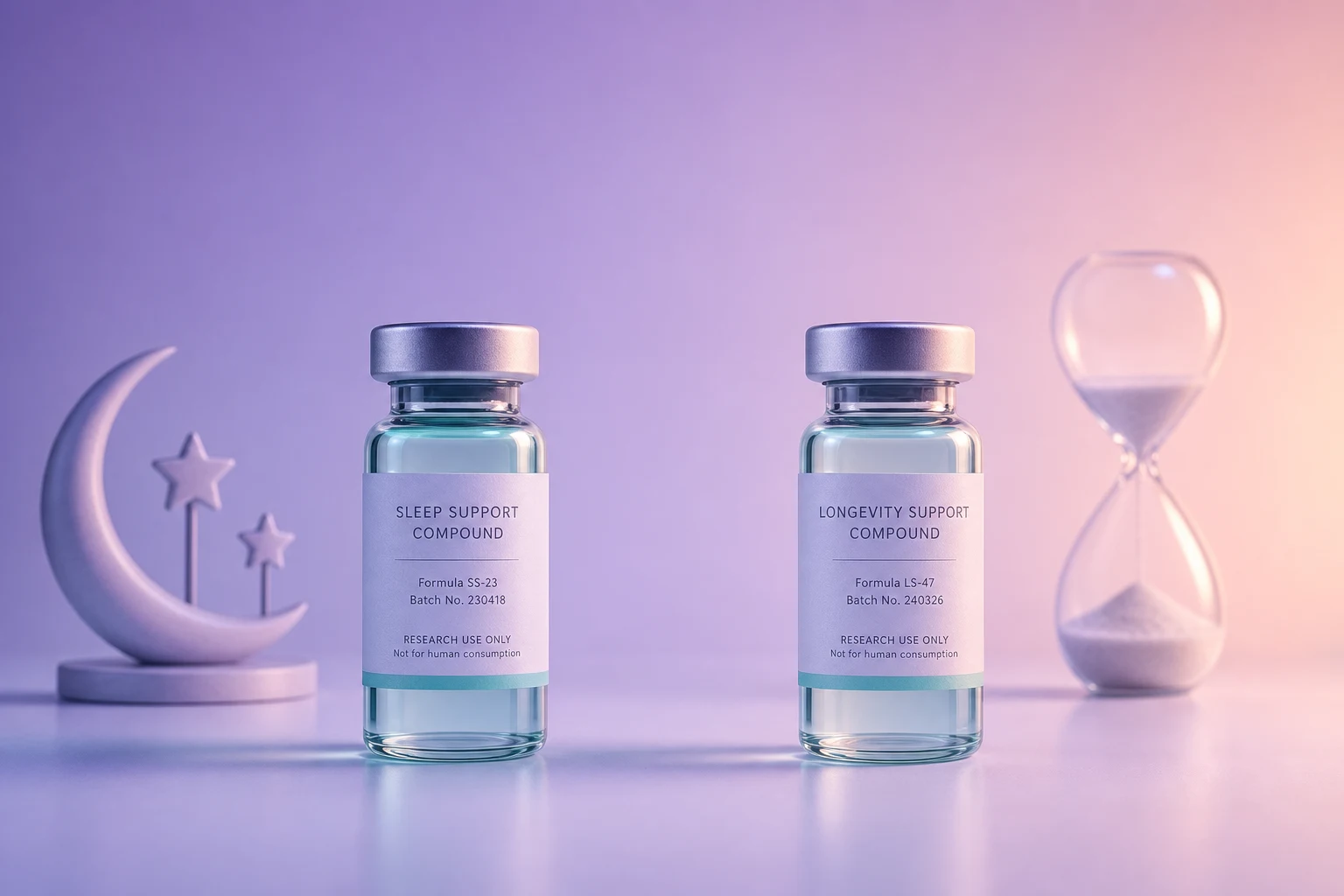
Both are older, well-known research peptides tied to the pineal gland and the sleep-wake cycle, but they were studied for different outcomes. One is discussed for sleep architecture; the other for telomere biology and longevity signaling.

Epitalon vs. GHK-Cu
Both wear the anti-aging label, but they attack aging from opposite directions. One is studied for cellular and longevity signals deep in the body; the other for visible skin and tissue repair. They're less alternatives than two separate conversations.

GHK-Cu vs. Matrixyl
Both are peptides studied for firmer, smoother skin, and both signal your skin to make more collagen. But one is a copper-carrying repair molecule and the other is a gentle cosmetic workhorse, and that shapes how you'd actually use each.

HGH vs. GH Peptides
Both aim at the same thing: more growth hormone activity in your body. One delivers the hormone directly. The other asks your own pituitary to make more. That single difference shapes almost everything else.

Ipamorelin vs. GHRP-6
Both trigger a growth hormone release through the same doorway, but one does it cleanly and the other comes with side effects you can feel. The difference is selectivity.
Ipamorelin vs. Sermorelin
Both are gentle, beginner-friendly ways to nudge your own growth hormone, but they work through different doorways. That makes them less rivals than teammates, which changes how you should think about choosing.

NAD+ vs. 5-Amino-1MQ, which one you actually want
Both get sold in the energy aisle and they do almost nothing alike. One is a molecule you're running low on, the other blocks an enzyme that gets in the way, and that difference decides whether you take it every week or a few months a year.

NAD+ vs. NMN
These aren't two competing compounds so much as two ways of raising the same molecule: the coenzyme itself by injection, or a capsule your body converts. The real difference is route, evidence, and what you pay per milligram.

Pinealon vs. Epithalon: Two Short Peptides, Two Different Questions
Pinealon and Epithalon come from the same family of short peptides, but researchers study them for different things. One is about the aging brain, the other about cellular aging and the body clock.

Semaglutide vs. Tirzepatide
Both are the household names of the GLP-1 world, and both reduce appetite and body weight. The difference is that one targets a single receptor and the other targets two, and that extra target shows up in the results.

Semaglutide vs. Tirzepatide vs. Retatrutide
You've heard these three names tossed around like they're basically the same thing with different price tags. They're not. Each one adds a receptor the last one didn't have, and that difference is exactly what you're paying for.