The Basics
Foundational guides written for someone who just found us and has no prior knowledge. No jargon, no assumed background.

Does BPC-157 Regrow Cartilage? What the Evidence Shows
A viral claim says BPC-157 regrows cartilage in the knee. The research behind that claim is real, but it doesn't say what the headline says. Here's the gap between the animal data and the human data.

GLP-1, GLP-2, GLP-3: What These Terms Actually Mean
You've probably heard Mounjaro called a 'GLP-2' and Retatrutide called a 'GLP-3.' The numbering looks like a drug generation ladder. It isn't, and the actual biology matters for reading new research accurately.
GLP-1s — What Everyone Is Talking About
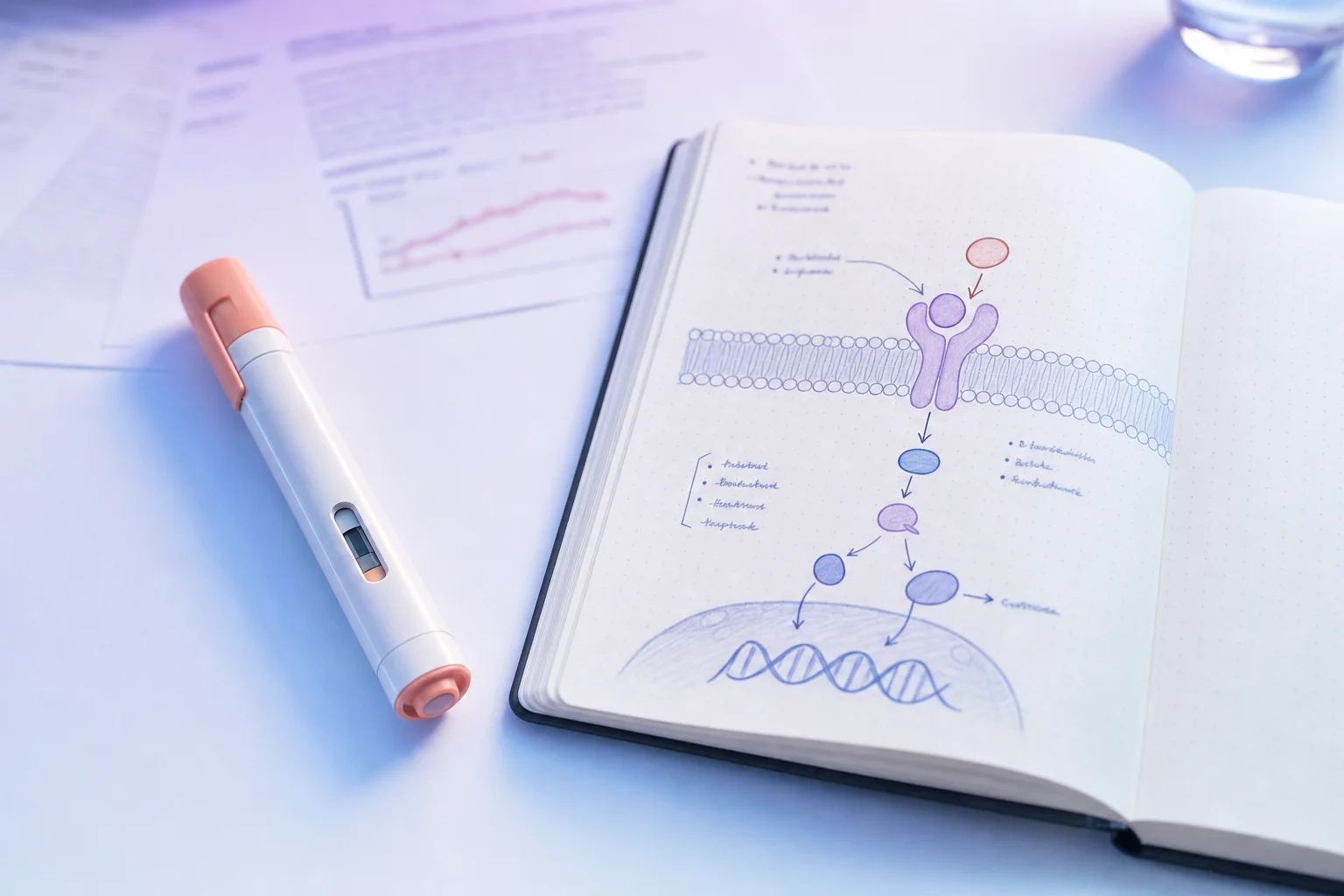
Semaglutide, tirzepatide, retatrutide. The GLP-1 class is the most-discussed peptide family right now. Here's what they are, how they work, and what the research actually shows, without the breathlessness.
How to Read a Research Notes Page
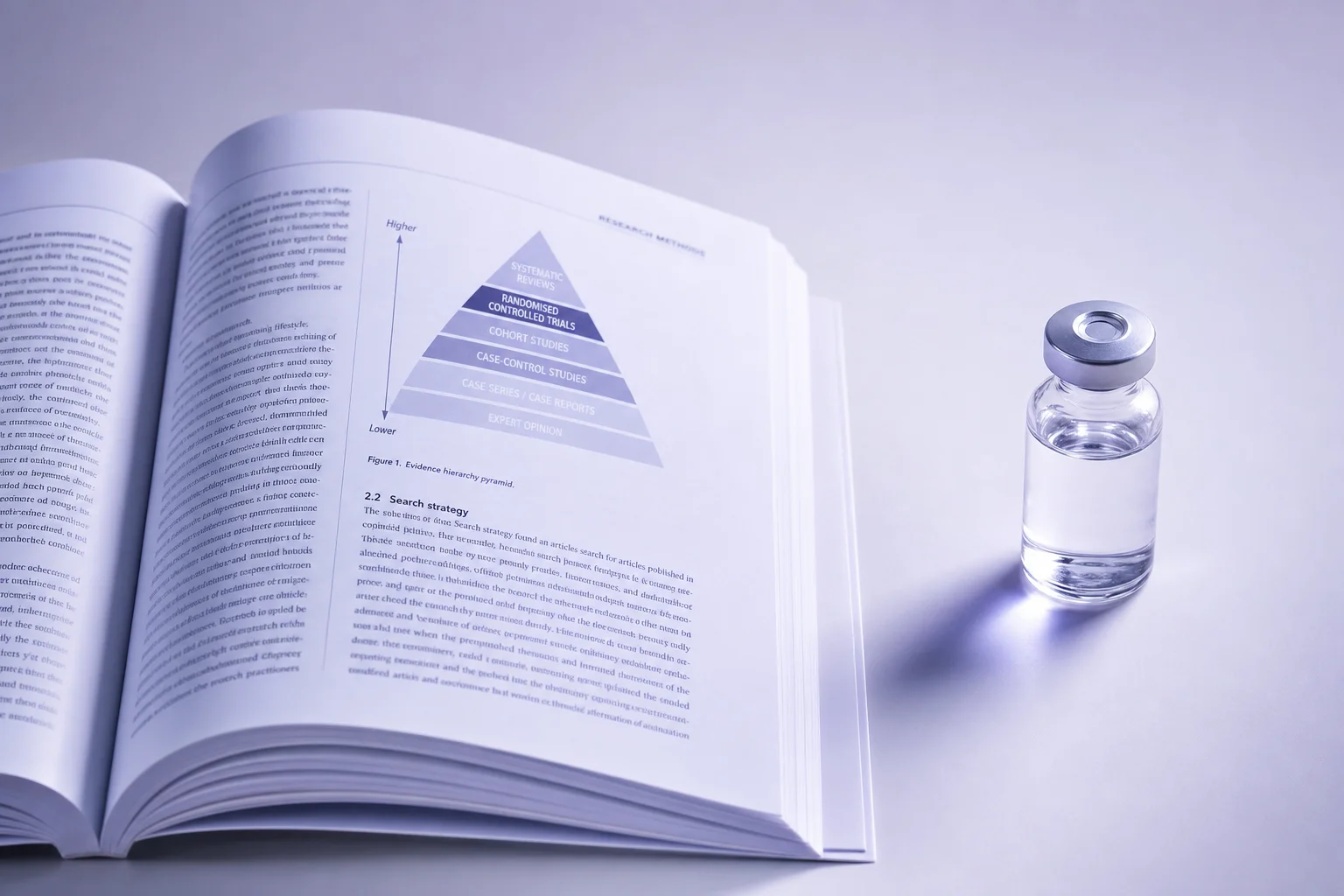
The research notes on this site are dense by design. This guide walks you through how to read one, what the citations mean, and how to tell strong evidence from early-stage findings.

How to Research Peptides on Your Own
You don't need a concierge doctor or a science degree to research this well. Here's how to build your own education, weigh what you read, and know when it's time to bring in a professional.

Peptides in Women's Research
A practical guide to research peptides studied for skin aging, weight management, hormonal health, and longevity. Clear information, no gym framing.
Research Peptides vs. FDA-Approved Compounds
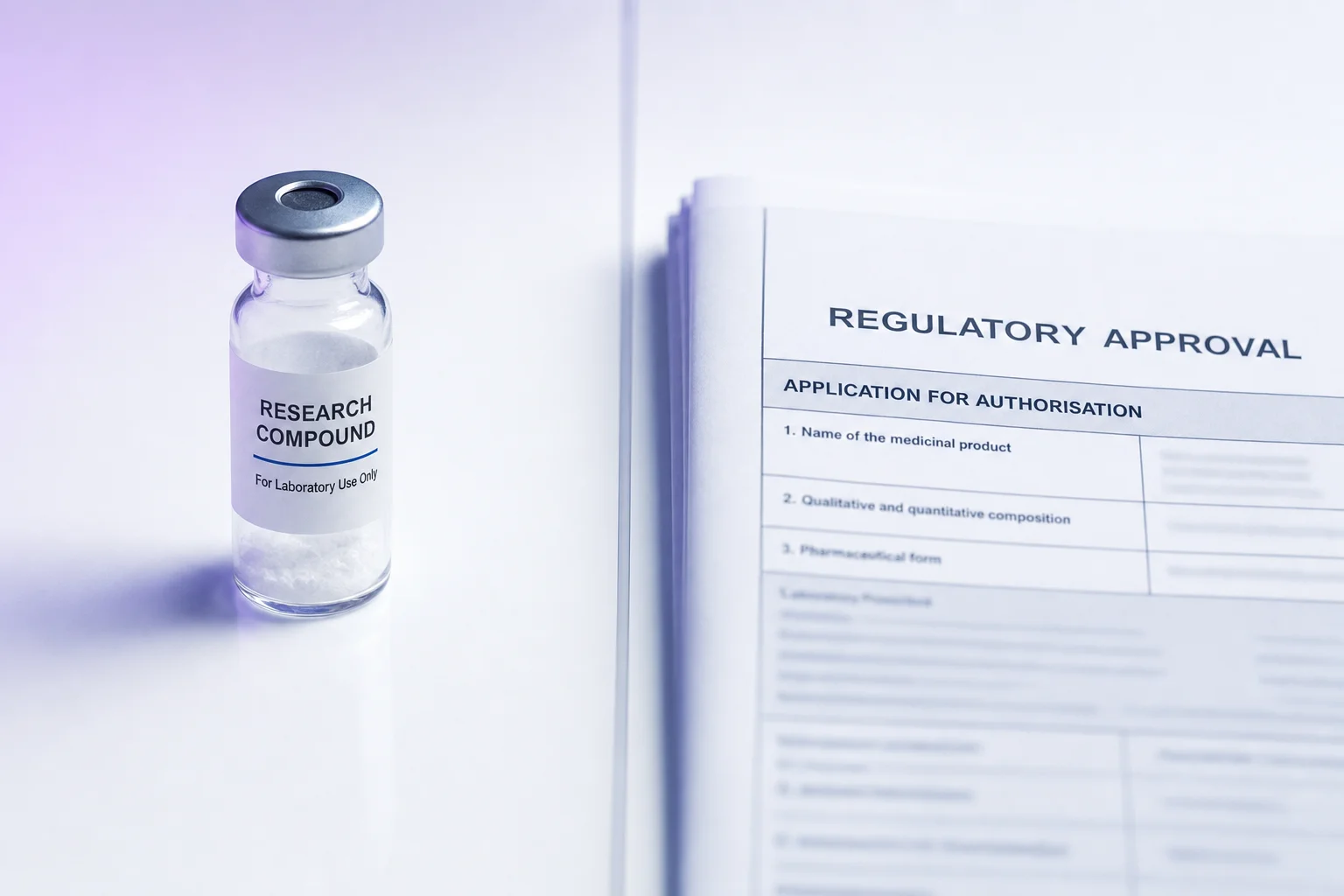
There's an important difference between a peptide sold for research and one prescribed by a doctor. Understanding that distinction tells you a lot about how to read the evidence and what questions to ask.
What are peptides, and what do they do?
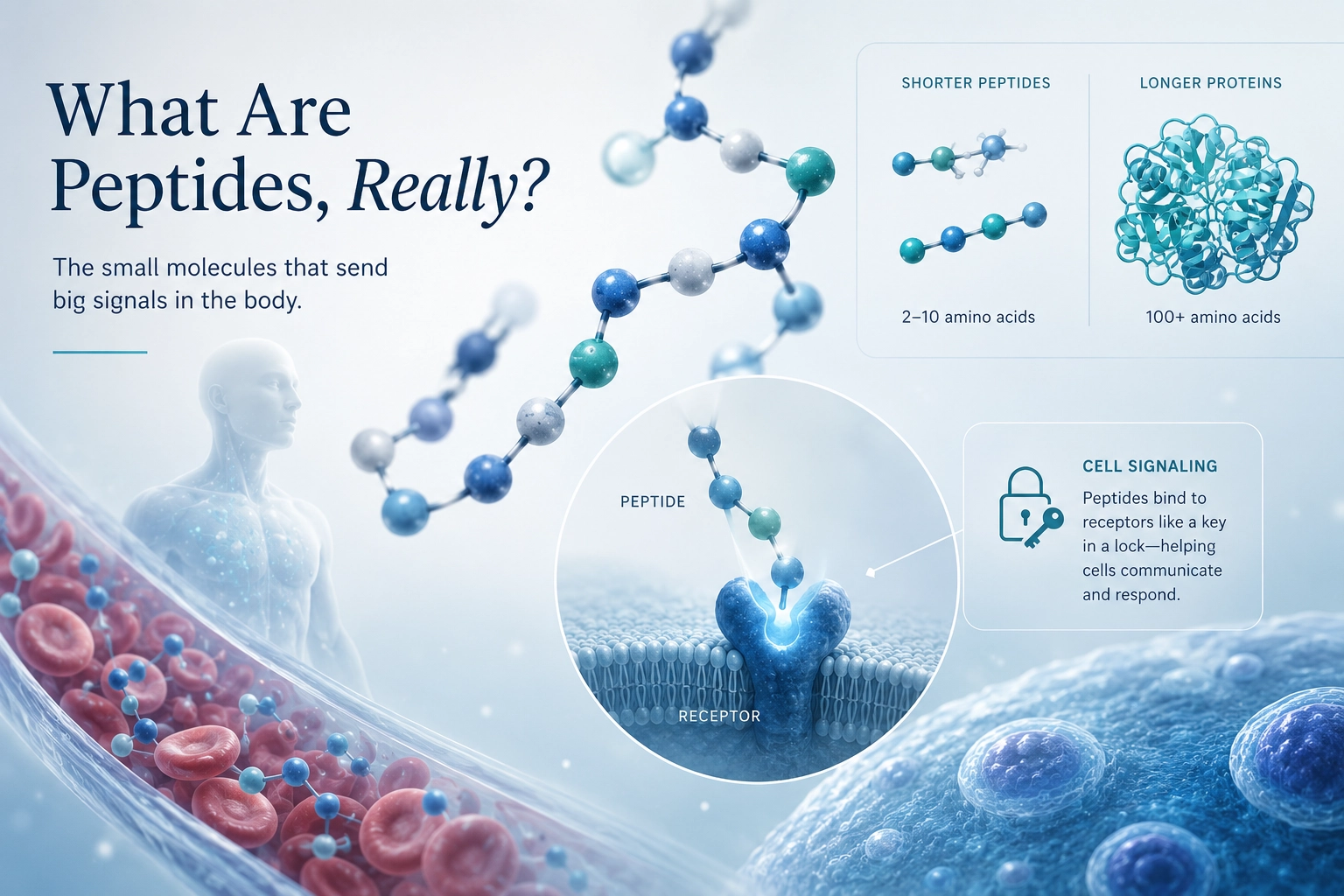
Peptides are everywhere in your body already, and they're how your cells talk to each other. Here's a plain-language explanation of what they are, what they actually do, and why researchers are so interested in them.

What's your why? The real reasons women research peptides
Ask most of the peptide internet and the answer is muscle. Ask the women actually reading this site and you get a joint that never fully healed, a sleep problem, a metabolic number that stopped responding to anything. Here's what's really behind the search, compound by compound, with the evidence sized to match.

Where Do I Start With Peptides? A Roadmap for Sequencing
There are dozens of these compounds and everyone insists all of them are essential. The useful question isn't which one is best, it's which one goes first and what earns the second one a place.

Who We Write For
Good information shouldn't require a concierge doctor.