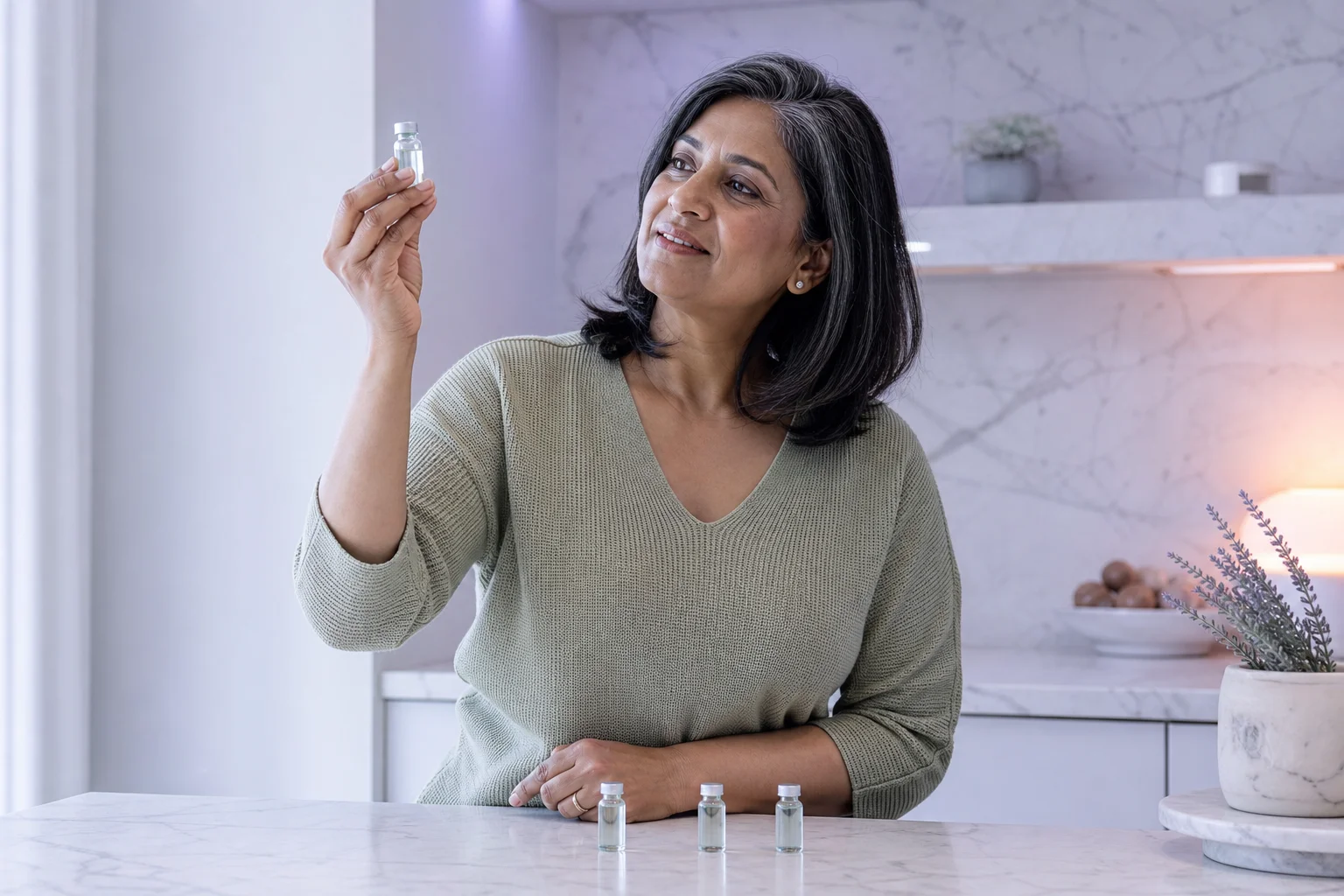
What are these three liquids?
All three are clear and all three look like water, which is most of the confusion. Sterile water is water that's been purified and made free of living organisms, with nothing else added. Bacteriostatic water, usually called bac water, is that same sterile water with 0.9% benzyl alcohol dissolved in it. Acetic acid is the acid in vinegar, sold for peptides as a heavily diluted solution in sterile water.
So the first two are close cousins, and the third is a different tool. If you're after what makes a good bottle of bac water and who sells it, that's in our guide to where to buy it, and this page sticks to how the three compare.
Does the vendor's listing name a liquid?
Start here, because it settles the question before any general rule does. Some listings say nothing about the liquid, which points to bac water. Others name one for that specific compound. If the listing or the paperwork that came with the vial says acetic acid, use acetic acid, and if it says sterile water, that's the vendor's call to follow.
Vendors don't always agree with each other on the same compound, so go by the one whose vial is in your hand. Once you've picked the liquid, the bac water math guide covers how much to add and how to read the syringe.
Why is bac water the default for a vial you'll reuse?
Benzyl alcohol doesn't kill bacteria, it stops them from multiplying, and that's the whole difference between bac water and sterile water. Every time a needle goes through a vial's rubber stopper there's a small chance of carrying something in, so a liquid that holds growth in check is built for a vial you'll return to. That's why bac water is the standard for multi-use vials.
The peptides people ask us about most, BPC-157 and TB-500 among them, are mixed with bac water. It's mildly acidic to neutral, which most peptides are perfectly happy in, and a mixed vial still goes in the fridge. Our storage guide covers how long a mixed vial keeps and how to tell it's gone off.
When does sterile water make sense?
Sterile water is single-use. With no preservative, a vial mixed with it is a use-it-soon vial, and an opened bottle of it is a use-it-once bottle. It fits when you're mixing something you'll finish in one go, or when a vendor names it for a particular compound.
It's also the liquid people reach for when bac water is hard to find. That works for a single mix. For a vial you'll be drawing from for weeks, it's the weaker fit, and it's usually better to order bac water than to stretch sterile water into a job it wasn't made for.
Which peptides need acetic acid?
The best-known one is IGF-1 LR3, and vendor listings usually name a dilute acetic acid solution, somewhere between 0.1% and 1%, as the liquid to mix it with. Some peptides carry a charge that makes them clump or cloud up in near-neutral water, and a little acid nudges the powder into dissolving cleanly where plain water would leave a vial that won't clear.
That's also why acetic acid isn't a stand-in for bac water. It's solving a dissolving problem, not a contamination problem, so if a listing doesn't mention it, you almost certainly don't need it.
Can I use vinegar for acetic acid?
No. Vinegar is acetic acid, but at roughly 5 percent it's far stronger than what's sold for peptides, it isn't sterile, and it carries whatever it was made from. The bottles sold for peptides are a ready-made, sterile, much weaker solution, and this is going into a vial you'll inject from. A pantry shelf is great for salad dressing and not much else here.
What if I run out of the one I need?
Pick one liquid for each vial and stay with it, because topping up with a different one changes what's in there. If you've got two peptides mixed in different liquids, say one in bac water and one in acetic acid, keep them in separate syringes too. Our guide on combining peptides in one syringe goes through why matching liquids matters.
If a vial calls for a liquid you don't have, order the right one before you mix. A reconstituted peptide can't be un-mixed, and the powder is usually the bigger part of the bill.
How do the three compare side by side?
| Liquid | Preservative | Use | pH | Typical fit |
|---|---|---|---|---|
| Bacteriostatic water | Yes, benzyl alcohol | Multi-use | Mildly acidic to neutral | Most peptides |
| Sterile water | None | Single-use | Mildly acidic to neutral | A mix used at once |
| Acetic acid solution | No standard one | Check the label | Acidic | Peptides that resist water |
When you shop, compare the price per mL, not the bottle price, because sizes run from small vials to big multi-dose bottles. The same habit you'd use on peptides applies here, and our vendor pages are where to check who's been vetted.
What this page can't tell you
It can't tell you what your specific vial wants. The label or insert that shipped with it beats anything general we can say, and how long an acetic acid mix keeps depends on the bottle and the compound, not on one rule. Sellers also name these liquids loosely: a listing for "reconstitution solution" might be bac water under another name, so read the ingredient line for benzyl alcohol or acetic acid, and ask the seller if it isn't stated.
The peptides you'll mix with these are sold for research. You knew that, it's why you're reading this and not the label.