What the FDA is proposing
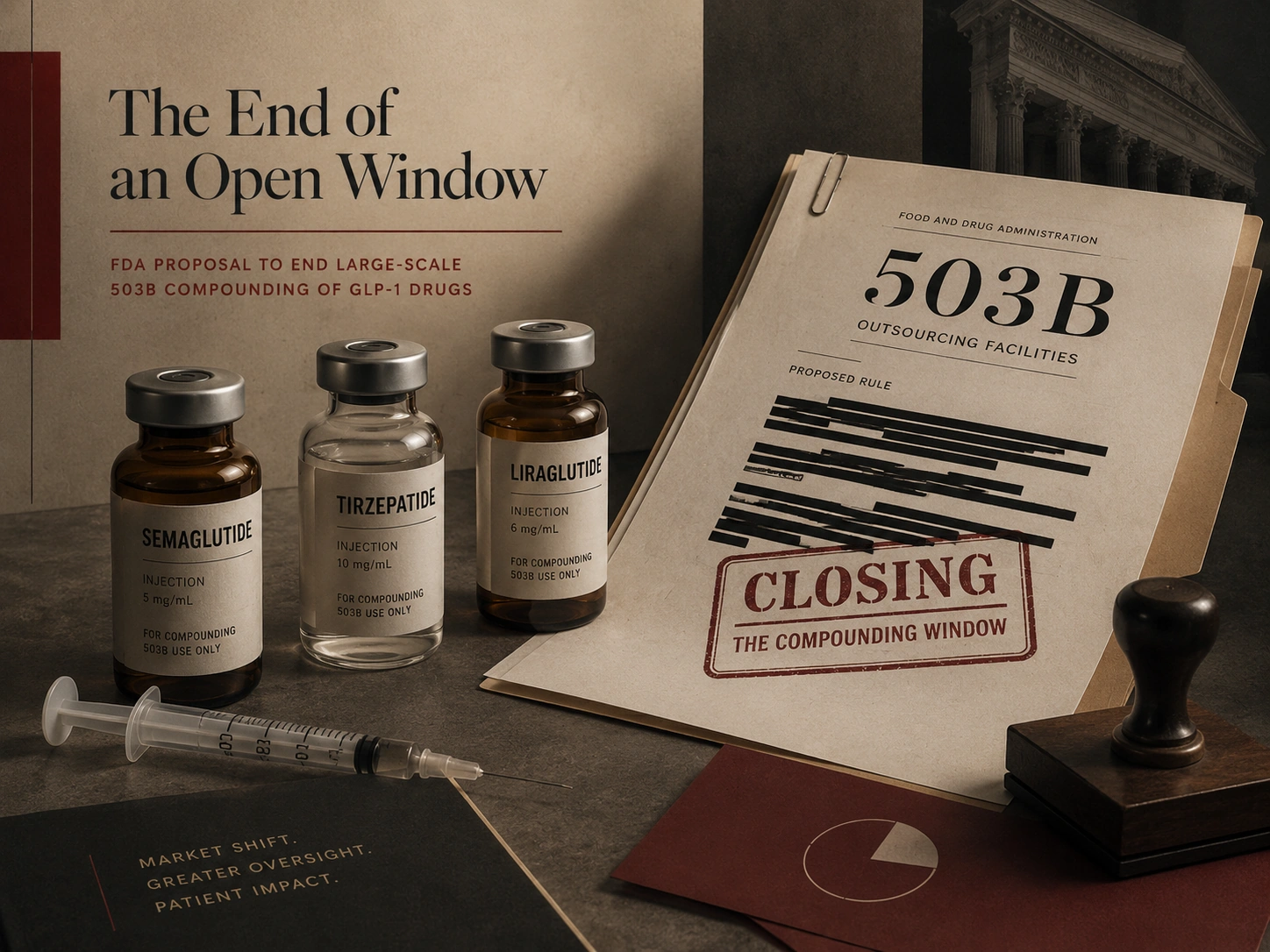
In a formal proposal published in May 2026, the FDA announced its intent to exclude semaglutide, tirzepatide, and liraglutide from the 503B Bulks List — the regulatory category that permits large-scale outsourcing facilities to compound copies of brand-name drugs for distribution to clinics and pharmacies without individual patient prescriptions.
The proposal is open for public comment until June 29, 2026. After that window closes, the FDA will review submissions and move toward a final rule. If finalized, large outsourcing facilities would no longer be permitted to compound these GLP-1 receptor agonists at scale.
503B outsourcing facilities are large commercial operations that compound drugs in bulk without a specific patient prescription, supplying clinics and med-spas at volume. 503A pharmacies are traditional compounders that fill prescriptions for individual patients. This proposal targets 503B specifically — the commercial scale end of the market. 503A compounding pharmacies that fill individual prescriptions are not the focus of this proposal.
Why the FDA says it's acting now
The FDA cited two primary reasons for the proposal. First, both semaglutide and tirzepatide were previously listed on the FDA's drug shortage list, which is what initially permitted large-scale compounding under shortage provisions. According to the FDA, those shortage designations have since been resolved — meaning the legal rationale that opened the door to large-scale compounding no longer applies.
Second, the agency pointed to a safety record that it described as concerning. As of early 2025, the FDA had received more than 455 adverse event reports linked to compounded semaglutide and more than 320 reports associated with compounded tirzepatide. Many of those reports involved dosing errors — patients self-administering incorrect doses from multi-dose vials, in some cases requiring hospitalization.
The FDA noted that compounded products, unlike FDA-approved drugs, are not subject to the same manufacturing standards, labeling requirements, or post-market surveillance that apply to Ozempic, Wegovy, Mounjaro, and Zepbound.
The timeline that got us here
What this does and doesn't change
If the proposal is finalized, large commercial outsourcing facilities will no longer be able to legally compound and distribute semaglutide, tirzepatide, and liraglutide in bulk. The low-cost compounded GLP-1 market that grew rapidly during the shortage years would effectively be shut down at the 503B level.
What this does not do: it does not directly affect 503A compounding pharmacies filling individual patient prescriptions, though those pharmacies operate under separate but related restrictions. It also does not change the FDA-approval status of brand-name GLP-1 drugs, and it does not affect access to the brand-name versions through insurance or patient assistance programs.
For people who have been accessing compounded semaglutide or tirzepatide through online clinics at prices significantly below the brand-name cost — often $100–$300 per month versus $900–$1,300 for brand-name — a finalized rule would likely force a transition back to brand-name drugs or to a dramatically smaller 503A compounding market, where prices are typically higher and supply less predictable.
What the GLP-1 drugs are approved for
Semaglutide (Ozempic, Wegovy, Rybelsus) is FDA-approved for type 2 diabetes management, chronic weight management, cardiovascular risk reduction, and — as of mid-2025 — non-cirrhotic MASH with moderate-to-advanced fibrosis. Tirzepatide (Mounjaro, Zepbound) is FDA-approved for type 2 diabetes, chronic weight management, obstructive sleep apnea, and as of early 2026, MASH. Liraglutide (Victoza, Saxenda) is approved for type 2 diabetes and chronic weight management.
Research into additional applications for these drugs continues, with active clinical trials examining cardiovascular disease, kidney disease, and neurodegenerative conditions.
How to submit a public comment
The public comment period is open through June 29, 2026. Comments can be submitted directly to the FDA via the federal rulemaking docket — submit a comment at Regulations.gov. Healthcare providers, patients, compounding pharmacies, and the general public are all eligible to submit. The FDA is required to consider all substantive comments before finalizing the rule.
We will continue covering this story as the comment period closes and the FDA moves toward a final decision.
Sources
- 1. U.S. Food and Drug Administration. "FDA Proposes to Exclude Semaglutide, Tirzepatide, and Liraglutide on 503B Bulks List." FDA Press Announcement, May 2026. fda.gov
- 2. Medical News Today. "FDA moves to remove GLP-1 medications from 503B Bulks List." May 2026. medicalnewstoday.com
- 3. Pharmacy Times. "FDA Moves to Permanently Close the Door on Compounded GLP-1s." May 2026. pharmacytimes.com
- 4. Orrick. "FDA Moves to Shut the Door on Large-Scale Compounding of GLP-1 Drugs." May 2026. orrick.com