What it is
Semaglutide is a synthetic analog of glucagon-like peptide-1 (GLP-1), a naturally occurring incretin hormone secreted by the gut in response to food. It is a 31 amino acid peptide modified from the native GLP-1 sequence to extend its half-life from minutes to approximately one week, enabling once-weekly dosing.[4]
It works primarily by binding to GLP-1 receptors in the pancreas, brain, and gut. This stimulates insulin secretion in a glucose-dependent manner, suppresses glucagon release, slows gastric emptying, and reduces appetite via central nervous system signaling. The appetite and satiety effects are what drive the weight outcomes seen in clinical trials.[4]
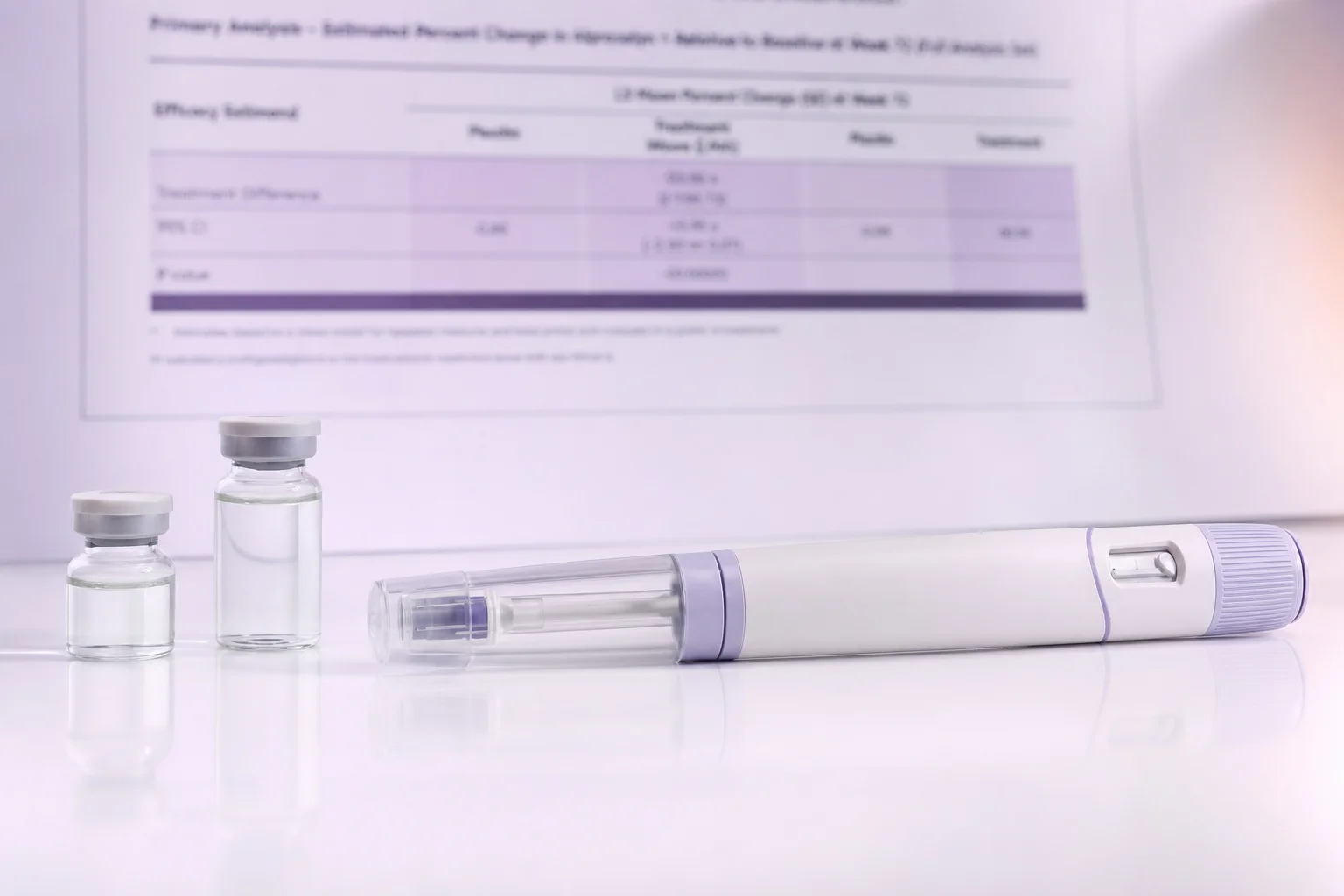
Semaglutide was developed by Novo Nordisk and is sold under the brand names Ozempic, Wegovy, and Rybelsus. Research peptide vendors also sell semaglutide as a research compound; that product is distinct from the pharmaceutical versions and is not FDA-approved for human use as sold by those vendors.
What researchers study it for
- Weight management in obesity The STEP 1 trial, published in the New England Journal of Medicine in 2021, found that once-weekly semaglutide 2.4 mg produced a mean weight reduction of 14.9% over 68 weeks in adults with obesity or overweight, compared to 2.4% in the placebo group.[1] This was among the largest weight reductions observed in a pharmacological trial to that point.
- Metabolic health, PCOS, and midlife weight GLP-1 agonists including semaglutide are being studied in polycystic ovary syndrome and insulin resistance, conditions that disproportionately affect women and often surface or worsen through perimenopause. Notably, women made up roughly three quarters of STEP 1 participants, so the headline weight findings are unusually well-grounded in female data.[1] Human trials in the PCOS context are ongoing.
- Type 2 diabetes and glycemic control Semaglutide was first developed and approved for type 2 diabetes management, where it reduces HbA1c, fasting glucose, and body weight. Multiple SUSTAIN trials have established its efficacy in this context across diverse patient populations.[5]
- Cardiovascular outcomes in type 2 diabetes The SUSTAIN-6 trial found that weekly semaglutide reduced the rate of major adverse cardiovascular events (heart attack, stroke, cardiovascular death) by 26% in people with type 2 diabetes at high cardiovascular risk.[2]
- Cardiovascular outcomes in obesity without diabetes The SELECT trial, published in 2023, demonstrated that semaglutide 2.4 mg reduced major cardiovascular events by 20% in overweight and obese adults who did not have diabetes but did have established cardiovascular disease. This was the first cardiovascular outcomes trial for a weight-management drug in a non-diabetic population.[3]
Research context
Unlike most research peptides, semaglutide has an extensive human clinical trial record. The STEP program (five major trials) and SUSTAIN program (multiple trials) together represent tens of thousands of participants across diverse populations and geographies.[1][2] The cardiovascular data from both SUSTAIN-6 and SELECT represent some of the most rigorous outcome data in the GLP-1 class.
The safety profile of pharmaceutical semaglutide is well-characterized. The most common adverse effects are gastrointestinal: nausea, vomiting, diarrhea, and constipation, which are typically dose-dependent and tend to diminish over time. More serious but rare concerns include pancreatitis and thyroid C-cell tumors (observed in rodent models; human relevance is still being studied).[4]
Research peptide semaglutide sold by vendors is not subject to the same pharmaceutical manufacturing standards as Ozempic or Wegovy. Purity, concentration accuracy, and sterility can vary significantly between vendors, which is a meaningful consideration for any research context.
Typical research parameters
| Parameter | Typical range |
|---|---|
| Common vial sizes | 2 mg, 5 mg, 10 mg (research peptide); pharmaceutical pens dose in 0.25–2.4 mg increments |
| Supplied as | Lyophilized powder (research peptide); pre-filled injection pen (pharmaceutical versions) |
| Storage | Lyophilized: refrigerated; reconstituted: refrigerated, use within 28 days |
| Administration studied | Subcutaneous injection (weekly, primary route); oral tablet (Rybelsus); intravenous (research settings only) |
| Half-life | Approximately 7 days, enabling once-weekly dosing |
| Purity to look for | ≥98% by HPLC; third-party certificate of analysis recommended for research use |
References
- [1] Wilding JPH, Batterham RL, Calanna S, et al.; STEP 1 Study Group. Once-Weekly Semaglutide in Adults with Overweight or Obesity. New England Journal of Medicine. 2021;384(11):989–1002. PubMed ↗
- [2] Marso SP, Bain SC, Consoli A, et al.; SUSTAIN-6 Investigators. Semaglutide and Cardiovascular Outcomes in Patients with Type 2 Diabetes. New England Journal of Medicine. 2016;375(19):1834–1844. PubMed ↗
- [3] Lincoff AM, Brown-Frandsen K, Colhoun HM, et al.; SELECT Trial Investigators. Semaglutide and Cardiovascular Outcomes in Obesity without Diabetes. New England Journal of Medicine. 2023;389(24):2221–2232. PubMed ↗
- [4] Smits MM, Van Raalte DH. Safety of Semaglutide. Frontiers in Endocrinology. 2021;12:645563. PubMed ↗
- [5] Aroda VR, Ahmann A, Cariou B, et al. Comparative efficacy, safety, and cardiovascular outcomes with once-weekly subcutaneous semaglutide in the treatment of type 2 diabetes. Diabetes and Metabolism. 2019;45(5):409–418. PubMed ↗