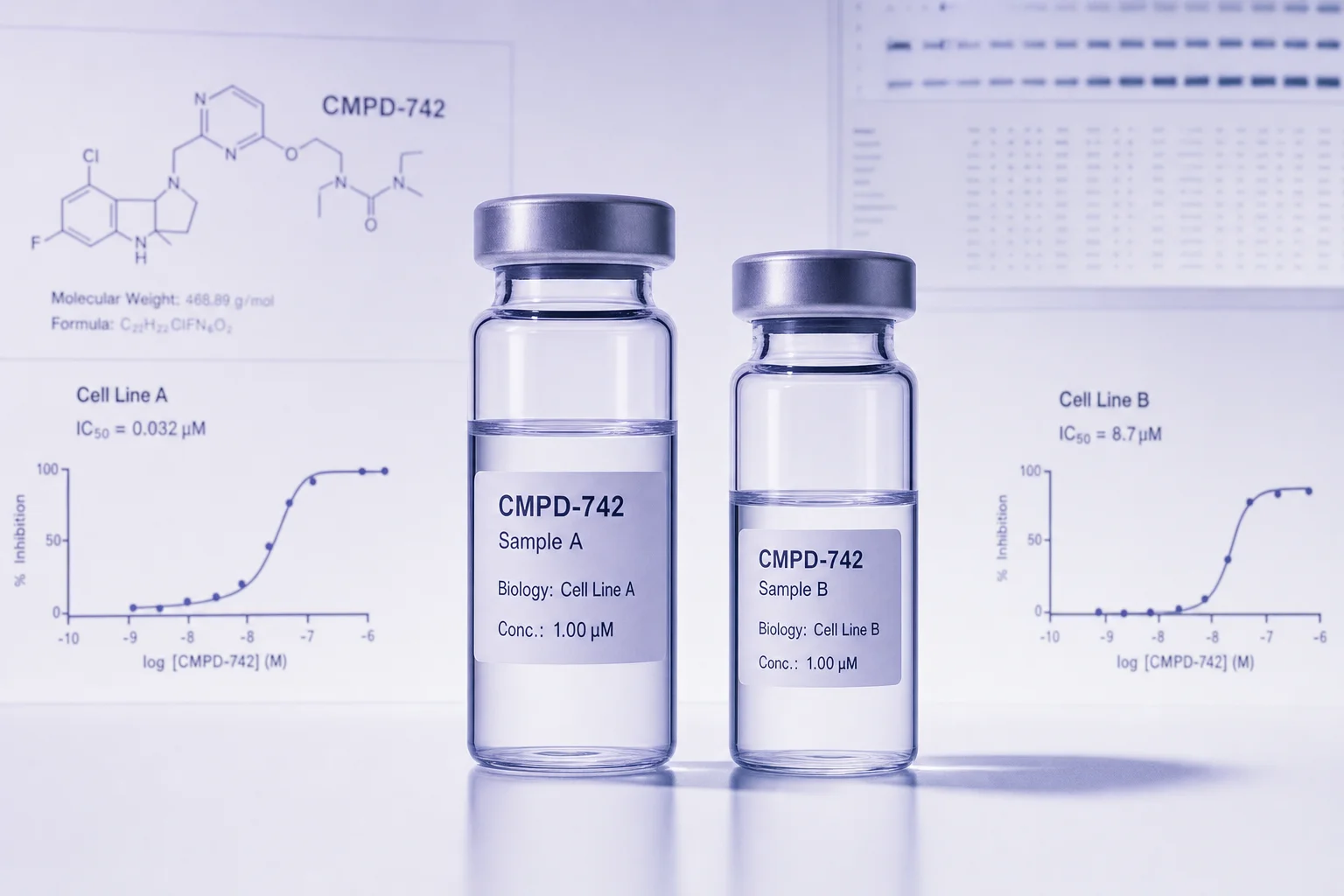
This piece was prompted by a video from Dr. Ashley Froese, a physician who teaches a course on peptides, on why men and women can respond so differently to the same compound. Her core idea is worth holding onto: a peptide is a message, and every body receiving that message is a different receiver. A 35-year-old man building muscle and a 52-year-old woman in perimenopause aren't the same starting point. We took that framing to the research to see where it holds up. This is education, not medical advice.
Why sex belongs in the conversation
Most of the loud advice online is written as if one body is the default body: dose this much, expect this result, watch for these side effects. But a man's hormones are closer to a long, slow downhill, while a woman's re-tune on a monthly cycle and then reset entirely at menopause. That moving target is exactly why the same peptide can be received so differently. And here's the irony: the biggest weight-loss peptide trials were mostly run in women. The pivotal STEP 1 trial of semaglutide was 74 percent female, average age 46 (Wilding et al., New England Journal of Medicine, 2021). That's almost exactly our reader. So a lot of "what the research shows" is, in fact, research on women, if anyone reads it that way.
Growth-hormone peptides: the difference is built in
Healthy women naturally make more growth hormone than men, in more frequent pulses, and estrogen is the reason (reviewed in Birzniece and Ho, 2017). That's the basis for a practical point Dr. Froese makes from clinical experience: the longer-acting growth-hormone peptides like CJC-1295 may not suit a woman's biology as cleanly as shorter-acting ones like sermorelin, and some women on protocols built for men report feeling overstimulated or irritable. It's a reasoned clinical view, not a settled fact, and no trial has compared these compounds in women versus men.
Tesamorelin is a related example. It's approved for HIV-related visceral fat and reduces that deep belly fat by 15 to 20 percent, but its trials were about 86 percent men (Falutz et al., 2007; Stanley et al., 2014). It may have looked like a "men's" peptide partly because men were the ones with the fat it targets, and the ones in the studies. Menopause pushes women toward that same visceral pattern, so the framing deserves a second look rather than a copied conclusion.
Healing peptides land in the soil you give them
Estrogen is a major driver of collagen and wound healing, and skin collagen drops by roughly 30 percent in the first five years after menopause. So a repair peptide like BPC-157 or GHK-Cu lands in a different environment depending on your hormones, the way a seed does in rich versus poor soil. Worth knowing about GHK-Cu specifically: most of its studies were done in women, but they were topical cosmetic studies, not evidence for injected use, and men were rarely the comparison group. That's female-heavy data, not a proven male-versus-female difference.
MOTS-c: promising, but read the fine print
MOTS-c is a small peptide that acts a bit like exercise in a bottle, and there's real interest in it for women because estrogen helps protect the mitochondria it works on, and animal studies suggest it may slow estrogen-related bone loss. One correction, though: you'll see claims that the FDA is "looking to approve" MOTS-c for osteoporosis. We couldn't verify that anywhere credible. MOTS-c isn't FDA-approved for anything, and nearly all of the bone research is in mice. Interesting direction, early evidence.
GLP-1 drugs: women tend to lose more, and feel more
This is the clearest sex difference right now. Pooled tirzepatide trials found women lost more weight than men at every dose (ENDO 2025), and women on semaglutide lost more in the STEP-HFpEF heart-failure analysis too (Butler et al., 2024). The likely reason is simple: a flat dose hits a smaller body harder, because these doses aren't sized to the body. The same dynamic shows up in side effects, with nausea and diarrhea reported more often by women. That's why starting low and going slow is genuinely evidence-based, not just cautious.
The bottom line
Sex is a real variable in peptide research, and the marketing layer almost never reflects it. When you see a dose, a result, or a side-effect list presented as universal, the fair question is: studied in whom, and at what body size? For midlife women, a few instincts hold up. Flat dosing can hit harder, so start low. The growth-hormone axis is genuinely different in women. And menopause is actively reshaping the body these compounds act on, which makes protecting muscle part of the conversation. As Dr. Froese puts it, the best question is usually not "what's the best peptide," but "what makes sense for the body I'm putting it into."
The compounds discussed here are research peptides and aren't FDA-approved for human use unless otherwise noted (semaglutide and tirzepatide are approved in specific branded forms; tesamorelin is approved for HIV-associated lipodystrophy). This is educational information, not medical advice, and nothing here's a recommendation to start, stop, or dose anything. Always work with a qualified healthcare provider.