What it is
Semax is a synthetic heptapeptide built from the N-terminal fragment of adrenocorticotropic hormone (ACTH), specifically residues 4 through 7, extended with a Pro-Gly-Pro tripeptide to improve metabolic stability. Its sequence is Met-Glu-His-Phe-Pro-Gly-Pro, and it was developed at the Institute of Molecular Genetics of the Russian Academy of Sciences. It is sometimes written as ACTH(4-7)PGP in the literature.
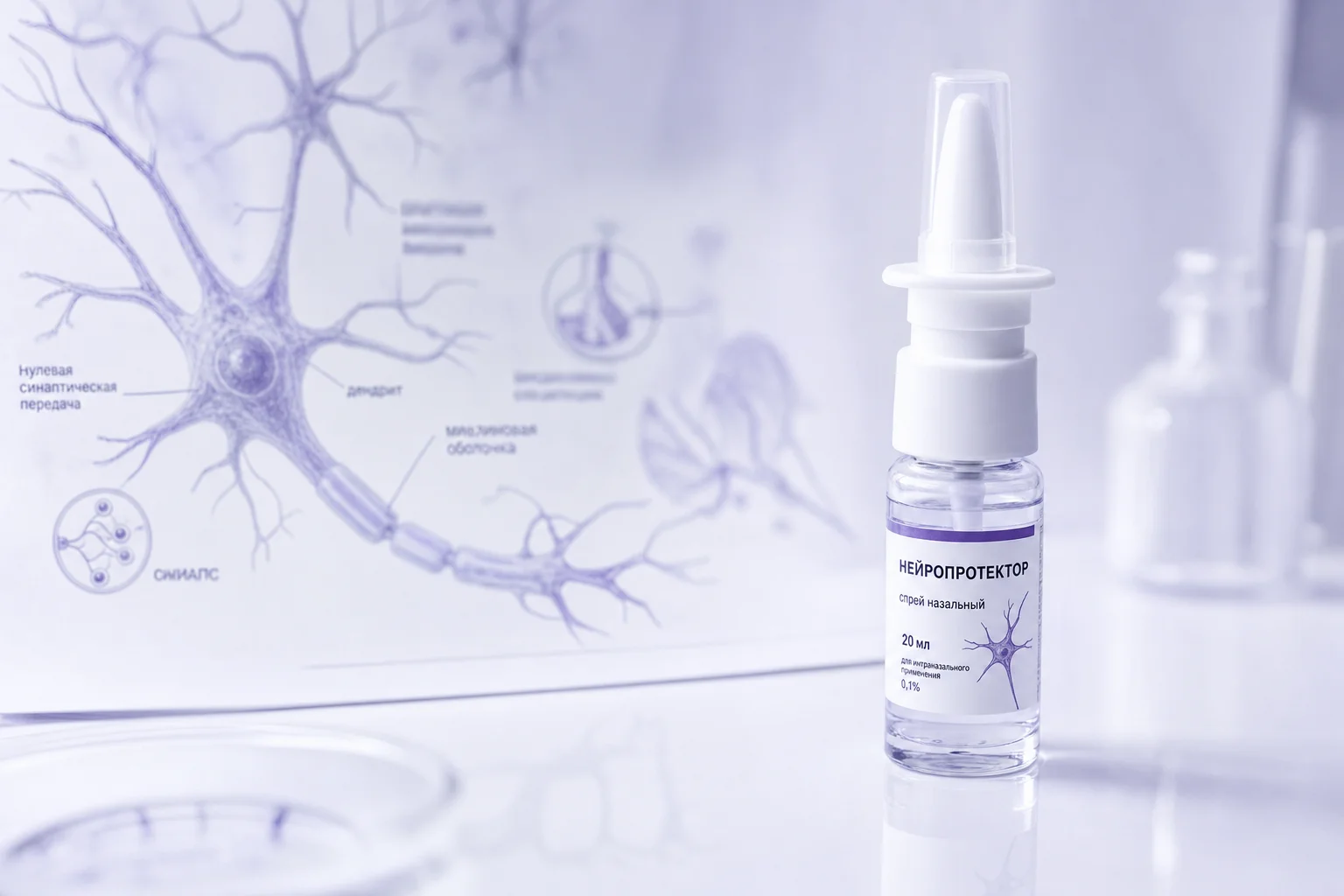
Semax is approved in Russia as a nasal spray for conditions including ischemic stroke, optic nerve disease, and cognitive decline. It has not received approval from the FDA or EMA, and outside of Russia it is sold as a research compound. It is closely related to Selank, another synthetic peptide developed by the same Russian research group, though the two have distinct primary research profiles.
What researchers study it for
- Neuroprotection following ischemic injury A clinical study in 30 patients with acute hemispheric ischemic stroke found that adding Semax to standard intensive therapy was associated with faster regression of neurological deficits, particularly motor dysfunction, compared to a control group of 80 patients receiving conventional therapy alone. [1] Mechanistic research in rat ischemia models has examined how Semax modulates neuroinflammatory gene expression following reperfusion injury.
- BDNF upregulation and neuroprotective signaling Studies have found that intranasal Semax produces rapid, dose-dependent increases in brain-derived neurotrophic factor (BDNF) protein in the rat basal forebrain. BDNF is a key regulator of synaptic plasticity and neuronal survival. Researchers have proposed this pathway as a candidate mechanism for Semax's cognitive and neuroprotective effects. [4]
- Brain network connectivity and cognitive function A small human study using resting-state functional MRI found that intranasal Semax increased the volume of the medial frontal cortex subcomponent of the default mode network in healthy volunteers within 20 minutes of administration, compared to placebo. The default mode network is involved in self-referential thought and some aspects of memory consolidation. [2]
- Dopaminergic and serotonergic modulation Rodent studies have examined Semax's effects on striatal monoamine systems. One study found that Semax increased striatal serotonin metabolite levels by up to 180% and potentiated dopamine release elicited by amphetamine, suggesting activity at both serotonergic and dopaminergic pathways. [3]
- Anxiety, learning, and neurochemical resilience Animal research has examined whether Semax can counteract neurochemical disruptions induced by early-life SSRI exposure. One rat study found that Semax administration reduced anxiety-like behavior, improved performance on a food-motivated maze task, and normalized monoamine levels in brain structures disrupted by neonatal fluvoxamine exposure. [5]
Research context
The Semax evidence base is primarily composed of animal model studies and mechanistic in vitro work, with the majority of published research originating from Russian institutions. This concentration is partly explained by Semax's status as a registered pharmaceutical in Russia, which has motivated sustained domestic investment in its study. The compound has more published research than most nootropic peptides, but the geographic and linguistic concentration of that research limits independent replication by outside groups. [3] [4]
Human evidence is limited. The most frequently cited clinical study (PMID 11517472) is a 1997 controlled clinical trial in ischemic stroke patients, published in a Russian-language journal without a DOI. [1] The resting-state fMRI study from 2018 enrolled 24 healthy volunteers and represents the clearest published human data on Semax's acute brain effects, though it was a small, single-site study. [2] Researchers interested in Semax should treat the human data as preliminary and the mechanistic animal work as suggestive rather than conclusive.
Typical research parameters
| Parameter | Detail |
|---|---|
| Common vial sizes | 5 mg lyophilized powder (research vendors); 3 ml nasal spray vials (Russian pharmaceutical form) |
| Supplied as | Lyophilized powder requiring reconstitution, or 0.1% nasal drop solution |
| Storage | Refrigerated (2–8°C); protect from light and moisture |
| Stability | Lyophilized: 24+ months; reconstituted solutions: use within 2–4 weeks refrigerated |
| Administration studied | Intranasal (primary route in human and most animal studies); subcutaneous injection (some animal protocols) |
References
- [1] Gusev EI, Skvortsova VI, Miasoedov NF, et al. [Effectiveness of semax in acute period of hemispheric ischemic stroke (a clinical and electrophysiological study)]. Zhurnal Nevrologii i Psikhiatrii Imeni S.S. Korsakova. 1997;97(6):26–34. PubMed ↗
- [2] Lebedeva IS, Panikratova YR, Sokolov OY, et al. Effects of Semax on the Default Mode Network of the Brain. Bulletin of Experimental Biology and Medicine. 2018;165(5):653–656. PubMed ↗
- [3] Eremin KO, Kudrin VS, Saransaari P, et al. Semax, an ACTH(4-10) analogue with nootropic properties, activates dopaminergic and serotoninergic brain systems in rodents. Neurochemical Research. 2005;30(12):1493–1500. PubMed ↗
- [4] Dolotov OV, Karpenko EA, Seredenina TS, et al. Semax, an analogue of adrenocorticotropin (4-10), binds specifically and increases levels of brain-derived neurotrophic factor protein in rat basal forebrain. Journal of Neurochemistry. 2006;97 Suppl 1:82–86. PubMed ↗
- [5] Glazova NY, Manchenko DM, Volodina MA, et al. Semax, synthetic ACTH(4-10) analogue, attenuates behavioural and neurochemical alterations following early-life fluvoxamine exposure in white rats. Neuropeptides. 2021;86:102114. PubMed ↗