What's actually happening
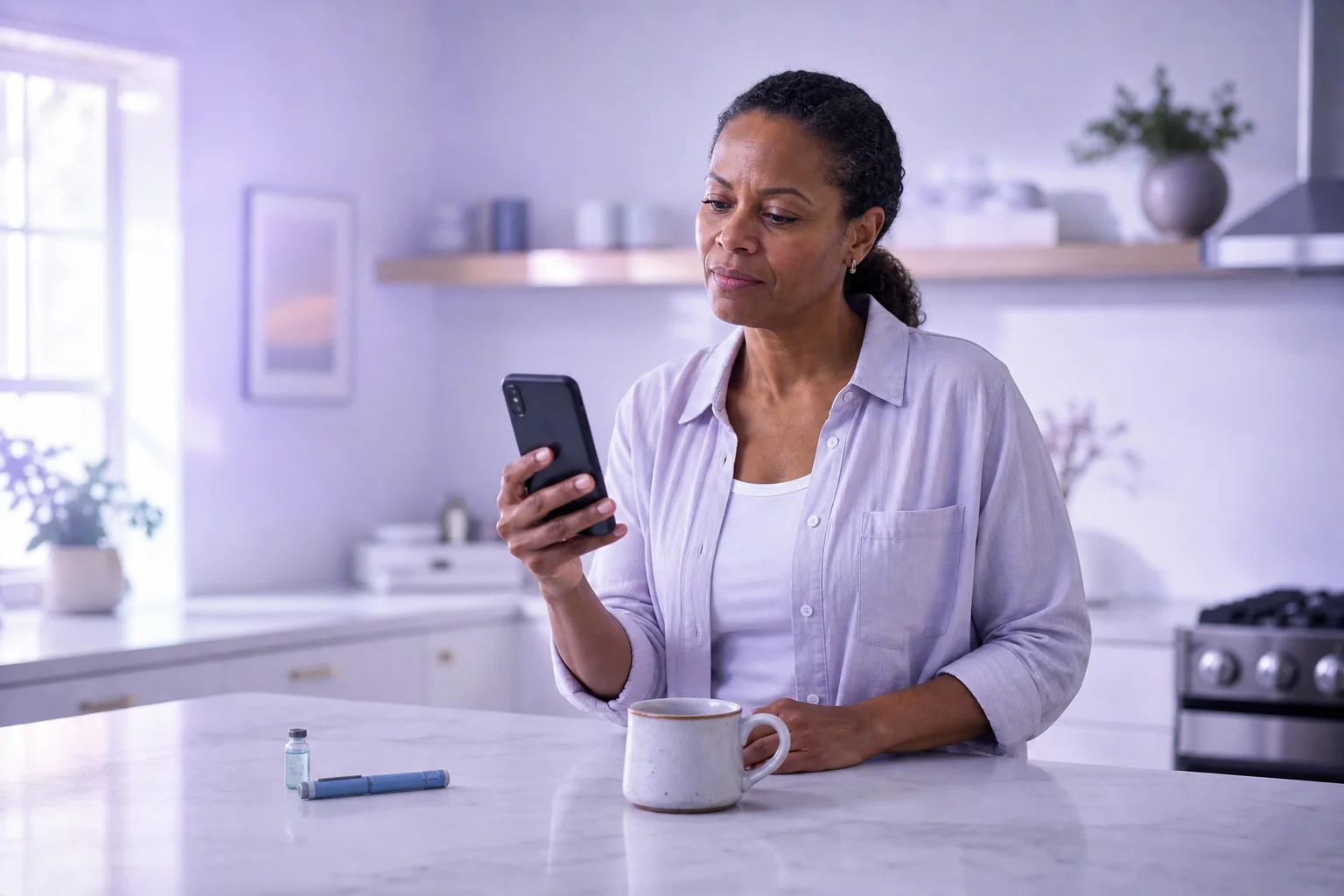
Search "GLP-1 microdosing" on Instagram or TikTok this year and the pitch has shifted. It isn't really about losing the last five pounds anymore. It's inflammation, energy, and a slower pace of aging, sold in a dose so small it barely counts as a dose at all. Women in their forties and fifties are trying it specifically for that anti-aging promise, taking a fraction of a standard semaglutide or tirzepatide dose on an irregular schedule, often through a compounding pharmacy or telehealth subscription rather than a prescription written for weight loss.
Cedars-Sinai's obesity medicine team put a name to what they were seeing from patients this spring. "Microdosing is not a medical term," obesity medicine director Amanda Velazquez, MD, told the health system's own publication in May 2026. "It's a term that has been popularized on social media." Her colleague, surgeon Jeremy Korman, MD, added that wellness companies "often define it arbitrarily as 25% of a standard dose, even though there's no standard dose for GLP-1s" to begin with.
The habit itself isn't new. Patients started stretching scarce doses of Ozempic and Wegovy during the 2023 and 2024 shortages, and some kept going after supply caught up, because it eased side effects like nausea or made a prescription last longer on a tight budget. What's changed is the pitch. The same fractional dosing that used to be framed as a workaround is now being marketed as the point, a gentler way to get GLP-1 benefits without the appetite suppression or the weight loss.
What the anti-aging framing leaves out
Every clinical study behind the anti-inflammatory and anti-aging claims circulating in wellness spaces used standard, FDA-studied doses, not microdoses. Nobody has published human data on whether a fraction of that dose produces a fraction of the effect, all of it, or none of it.
That gap matters because the case for GLP-1s and aging is real, it's just not built on the dose being sold as the anti-aging version. In the SELECT trial, semaglutide at its full 2.4 milligram weekly dose lowered C-reactive protein, a marker of inflammation, and cut major cardiovascular events by 20 percent in adults with heart disease and obesity but no diabetes, with some of that benefit showing up before much weight had come off. That trial is a large part of why researchers started asking whether GLP-1s do something to the body beyond appetite and blood sugar.
The one real anti-aging data point
The most direct evidence arrived this July, in a study published in Nature Communications by researchers at UC San Diego. It's the first randomized, placebo-controlled human evidence that semaglutide might slow biological aging, measured through epigenetic clocks that track chemical tags on DNA linked to inflammation and organ health. Participants who received weekly semaglutide injections aged more slowly across several of those markers than participants on placebo, including a 9 percent slower pace on one widely used clock.
Two things about that study matter for anyone reading it as proof the wellness posts are right. First, the participants had HIV-associated lipohypertrophy, a condition involving fat buildup and accelerated aging, not the general population and not women researching perimenopause. Lead author Michael Corley, PhD, was careful about that limit himself. "We are not saying that semaglutide reverses aging or makes people younger," he said. "What we are seeing is a signal." Second, the dose used was the standard weekly injection, not a microdose. Nobody has run this study, or anything like it, on the fractional doses being marketed as the anti-aging approach.
What this means for you right now
If you're researching semaglutide or tirzepatide for inflammation or aging rather than weight, the drug class has real signals worth taking seriously, and the fractional dosing strategy being marketed to you for that purpose doesn't have any of that evidence behind it yet. Cleveland Clinic obesity specialist W. Scott Butsch, MD, points out that a reduced dose can also let the drug clear your system faster than intended, so the side effects you were trying to avoid show up again each time without the steady blood levels the studies were actually built on. Compounded versions add another layer, since they aren't reviewed by the FDA for potency or purity, and a measuring error is easier to make when you're drawing up a fraction of a fraction yourself.
None of that means the underlying research is hype. It means the research and the trend are pointing in the same direction without being the same thing yet. If the inflammation and aging effects turn out to matter to you, right now they're tied to the doses these drugs were actually studied at, not the doses being marketed as gentler. Compare current per-mg pricing before you buy anything, and read a vendor's actual paperwork rather than a claim on a label.
What would change this is a trial that tests low, intermittent dosing head to head against standard dosing on the same aging markers. The federal ARPA-H program funded a large healthspan trial for semaglutide in February 2026, and it's testing standard protocols, not microdoses. We'll cover it if that changes.
Sources
- 1. Can Microdosing GLP-1s Promote Health and Weight Loss?, Cedars-Sinai, May 26, 2026.
- 2. Should You Microdose GLP-1 Medications?, Cleveland Clinic, July 31, 2026.
- 3. Popular Weight-Loss Drugs Ozempic and Wegovy May Slow Biological Aging, ScienceDaily / University of California San Diego, July 14, 2026, reporting on Corley et al., Nature Communications, 2026.
- 4. SELECT: Glucagon-like peptide-1 receptor agonist in obese patients with cardiovascular disease in the absence of diabetes, PMC.