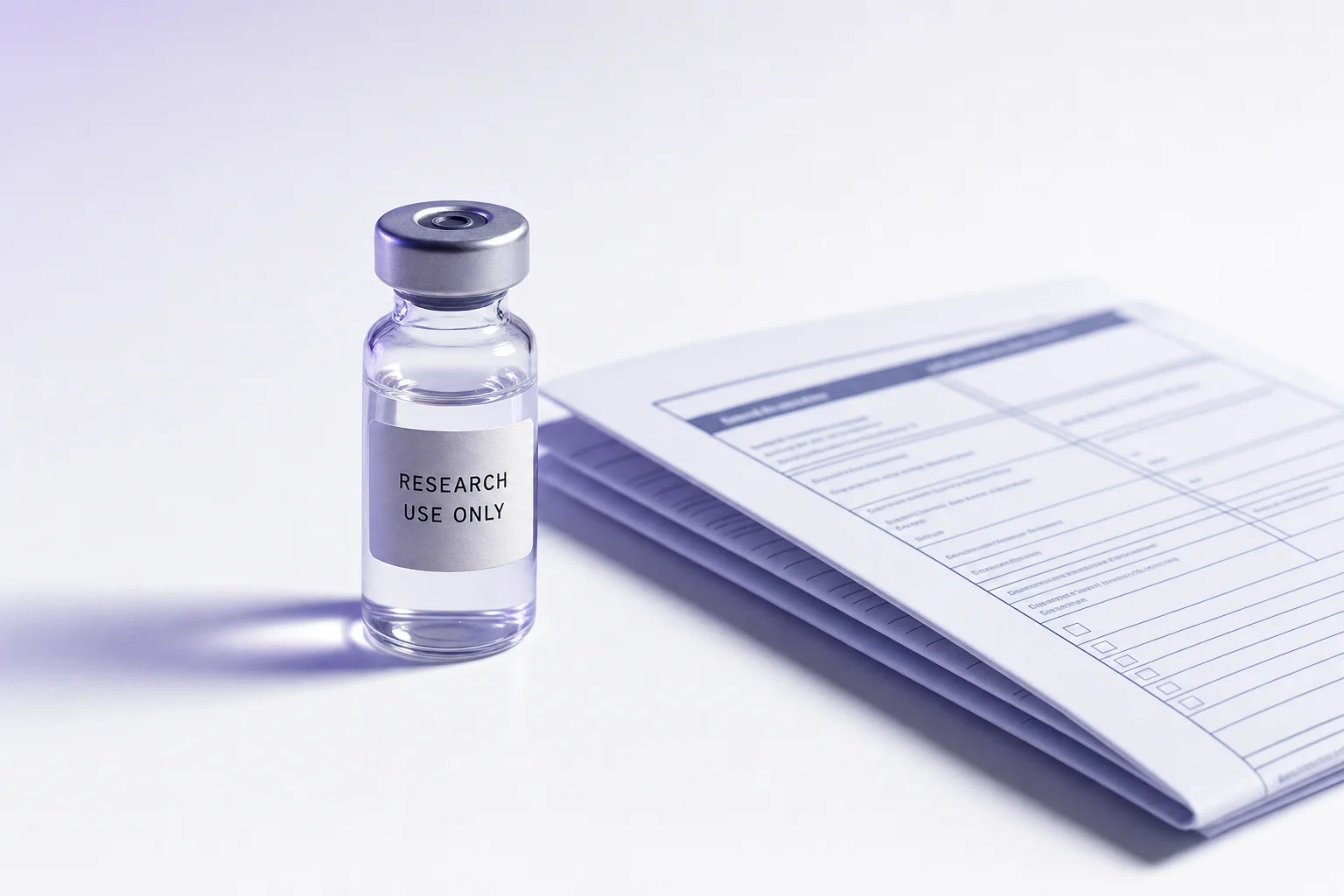
If you've spent more than five minutes shopping for peptides, you've seen the phrase. Every vendor uses it. What does it actually mean, and should it change how you think about your purchase?
The Short Version
"For research use only" is a legal designation — not a safety warning, not a quality rating, and not a meaningful guide to how the product will actually be used.
Vendors use it because it keeps them out of a regulated category. Without it, selling these compounds would require FDA approval, clinical trials, and a pharmaceutical supply chain that most small peptide vendors can't build or afford. The label is legal positioning, not product guidance.
Understanding that distinction makes you a more informed buyer.
Why Vendors Use the Label
The FDA draws a line between drugs sold for human use and compounds sold for research. Drugs for human use require clinical testing, manufacturing approvals, and precise labeling. Research chemicals are held to different standards — they can be produced and sold without going through that process, as long as they're explicitly not marketed for human consumption.
"For research use only" is that explicit carve-out.
It shifts regulatory responsibility. When a vendor labels a product for research, they're representing that they're selling it to researchers, not to individuals for self-administration. Whether the buyer actually uses it that way is outside the vendor's legal scope — which is exactly the point.
This isn't unique to peptides. You'll see the same language on many compounds, assay kits, and lab reagents that are routinely purchased and used by people who aren't running a formal study.
What It Tells You (and What It Doesn't)
The label says something real about the regulatory category. It doesn't say anything about:
Quality. A "research use only" peptide can be high-purity pharmaceutical-grade material, or it can be poorly manufactured junk with no testing. The label doesn't distinguish between them. Quality comes from the vendor's manufacturing practices and third-party testing — not the designation on the label.
Safety. The phrase isn't a hazard warning. It doesn't mean the compound is dangerous, experimental in any novel sense, or untested in humans. Many peptides with this label have been studied in clinical trials for decades. The research designation reflects regulatory category, not risk level.
Legality for you. In most jurisdictions, purchasing peptides for personal use is legal. The label is the vendor's legal cover, not yours. Your use of the compound isn't something the label addresses.
The Practical Translation
When you see "for research use only" on a peptide vendor's site, read it as: this product is sold in a regulatory category that doesn't require FDA approval, and the vendor isn't marketing it as a drug.
That's it.
It doesn't mean you're doing anything wrong by purchasing it. It doesn't mean the product is lower quality than something labeled differently. It means the vendor is operating in a space where the FDA's drug approval pathway doesn't apply.
Why This Matters for How You Buy
Because the label doesn't indicate quality, you have to look elsewhere for that information. The questions worth asking:
Does the vendor do third-party testing? A Certificate of Analysis (CoA) from an independent lab is the closest thing to a quality signal that exists in this space. It should show purity percentage, identity confirmation, and ideally heavy metal and endotoxin testing.
What's the purity figure? Reputable vendors publish this. Anything listed without a percentage is a flag.
Is there basic transparency about manufacturing? U.S.-based manufacturers, GMP-compliant facilities, and HPLC testing are all indicators worth noting — not guarantees, but meaningful signals.
The "research use only" label tells you nothing about any of this. Your vetting process has to go deeper.
A Note on How PPL Uses This
At Peptide Price Lab, we track pricing across vendors who use this designation — because that's how the market works. We don't evaluate whether a particular vendor's product is appropriate for your specific situation. We track what it costs, which vendors are active, and what price-per-milligram looks like across the market.
The research-use designation is built into the landscape we cover. Knowing what it means (and what it doesn't) helps you read vendor sites and make comparisons without getting tripped up by boilerplate legal language.
This article is for informational purposes. We track peptide pricing and market data — we don't provide medical or legal advice. Speak with a qualified provider before making decisions about any compound.