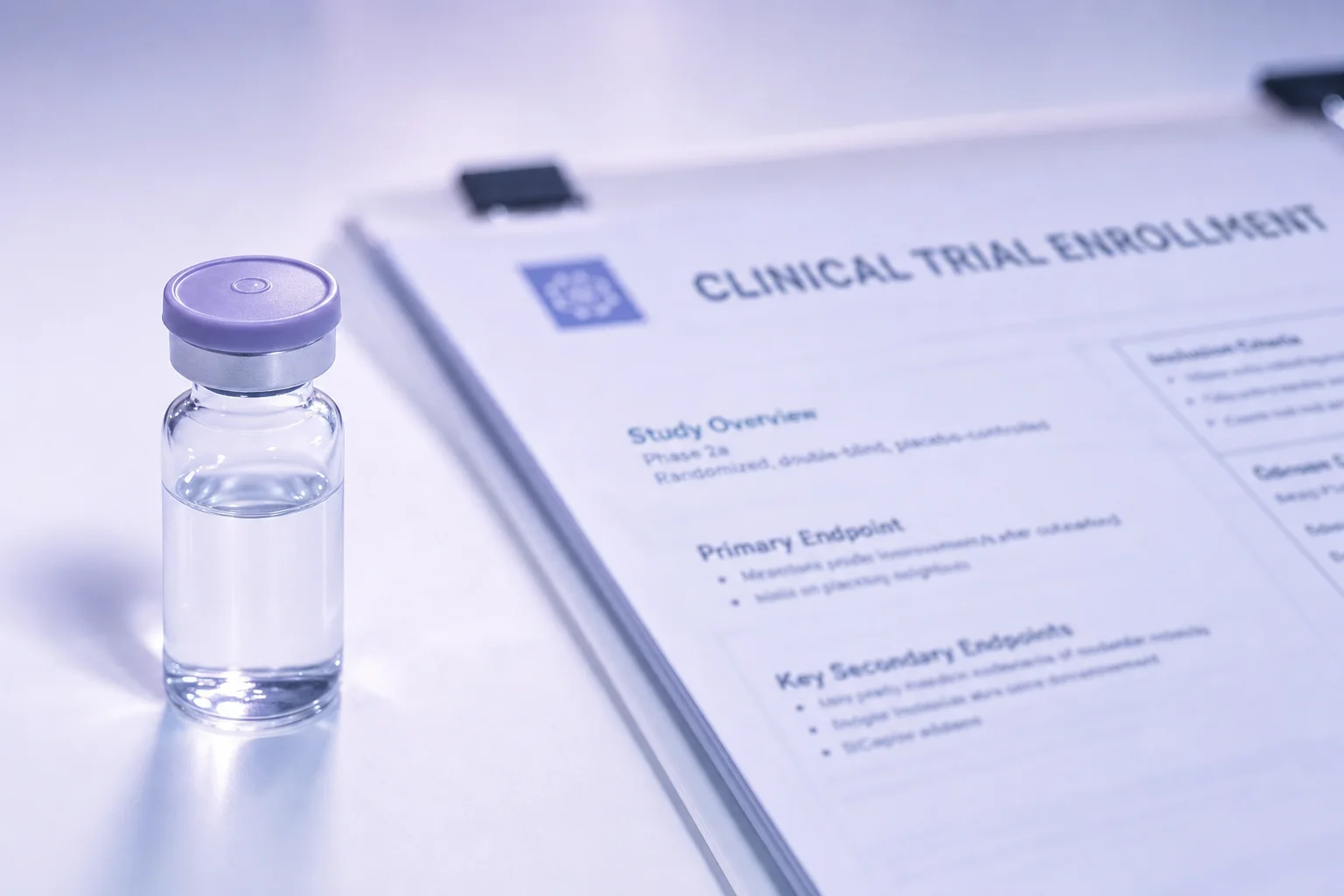
The pharmaceutical company behind AOD-9604 actually ran clinical trials in humans, including Phase 2b obesity trials. That separates it from the vast majority of research peptides, which are studied only in animal models and never tested in people at all. The trials didn't produce the weight loss results needed for regulatory approval, and the company discontinued pharmaceutical development in the mid-2000s. That outcome tells you something important, and it's something most content about this compound quietly glosses over.
What it actually is
Human growth hormone does a lot of things in the body: it builds muscle, it affects bone density, it influences fat metabolism, and it can also cause insulin resistance when levels are elevated for too long. Researchers at Monash University in Australia spent years trying to figure out which part of the growth hormone molecule was responsible for the fat-burning effects, with the goal of isolating that activity from everything else.
AOD-9604 is the result. It's a short 16-amino-acid fragment corresponding to the tail end of the growth hormone molecule, with a small modification to improve its stability. The key feature is that it doesn't bind the main growth hormone receptor. That means it doesn't trigger the insulin resistance or growth-promoting effects that make long-term use of intact growth hormone a concern. Researchers can study its effects on fat metabolism in relative isolation, which is exactly what the Monash group set out to do.
Why women in midlife are paying attention
If you're a woman in your 40s or 50s and your body composition has shifted in ways that don't seem connected to anything obvious, you're experiencing something real and measurable. Fat redistribution toward the midsection is one of the documented effects of the hormonal changes that come with perimenopause and post-menopause. Growth hormone production also declines steadily from your 30s onward. These two processes overlap, and the combination is part of why the metabolic picture in midlife can feel so frustrating.
AOD-9604 gets attention in this context because its mechanism is specifically about fat metabolism without the full hormonal footprint of growth hormone itself. The idea that you could support the body's fat-burning pathways without triggering the downsides of growth hormone replacement is genuinely appealing. The animal study evidence suggests the mechanism is real. The question is whether that translates to the kind of results worth pursuing in people, and that's where the story gets more complicated.
What the research actually shows
The foundational work, done in mice and rats, is solid. Multiple studies from the Monash group found that AOD-9604 reduced body weight gain in obese animals, increased fat oxidation, and decreased fat production in body fat tissue. Importantly, these effects occurred without the elevated blood sugar that comes with intact growth hormone treatment. An ex vivo study using human body fat tissue found the same pattern: increased breakdown of fat, decreased production of new fat. That human tissue work adds some credibility to the idea that the mechanism extends beyond rodents.
The animal studies also helped identify how the compound works. Experiments in mice bred without a specific receptor (the beta-3 adrenergic receptor) showed that AOD-9604's fat-loss effects disappeared in those animals, pointing to this pathway as part of the mechanism. That's useful mechanistic research.
Then came the human trials. Metabolic Pharmaceuticals, the company that developed AOD-9604, ran it through Phase 2a and Phase 2b trials for obesity. The Phase 2b trial didn't demonstrate sufficient weight loss to support continuing toward drug approval. The pharmaceutical program was discontinued. The compound later received FDA GRAS status as a food ingredient in 2014, which sounds like a regulatory milestone but isn't the same as drug approval and doesn't mean the obesity trials were reconsidered.
Where the animal and human results part ways
The gap between the animal model results and the human trial results is the most important thing to understand about AOD-9604. This isn't a compound that was never tested in people. It was tested, and it didn't work well enough for a pharmaceutical company to continue investing in it as an obesity drug. That's the clearest signal available.
What we don't know is whether smaller effects that weren't clinically significant for obesity treatment might still be meaningful in other contexts. The cartilage research is a separate and more recent angle: one animal study found AOD-9604 with hyaluronic acid reduced cartilage degeneration in a rabbit knee model. That's interesting, but it's a single animal study and no human clinical trials in joint health have been published.
The compound circulates in research contexts today, but the dosing used in those settings may not match what was studied in the clinical trials, and there's no standardized third-party testing requirement for research peptides. If the human obesity data from a properly run pharmaceutical trial wasn't sufficient for approval, the bar for being convinced by informal research context results should be high.